

30 Day
Tune Up Your Back: Soundwave Wellness Study
| STUDY TITLE | Tune Up Your Back: Soundwave Wellness Study |
|---|---|
| Submitted under umbrella |
|
| Date submitted |
Aug 25, 2025 |
| End date |
There is no pre-specified end date and sub-studies remain open long-term. |
| Language |
English |
| Efforia AI IRB approval recommendation |
— |
| Recruitment page preview | |
| Informed consent | |
| Study author |
Linda Bamber, Joseph Bamber, John Bamber |
| Principal investigator |
Matthew Amsden |
| Sub-Investigator for Adverse Events |
Dr. Viral Patel |
| Description |
Looking to support your back mobility and overall comfort? Join our study exploring WAVwatch 2.0, an innovative soundwave therapy device. This non-invasive technology is designed for individuals who want to maintain easy movement and flexibility without constantly reaching for over-the-counter options. By joining, you’ll discover how this gentle approach may help support everyday back comfort, mobility, and flexibility. |
| Participant engagement length |
30 Days |
| Sponsor |
This study is made possible by your payment to cover all supplies and expenses required to participate. |
| Cost to participant |
$597 |
| Included products & services |
WAVwatch 2.2 Preorder: $697
|
| Outcome measures |
PROMIS® Item Bank/Scale v.2.0 – Pain Behavior Survey Quality of Life and Health Survey ROMIS® Numeric Rating Scale v.1.0 – Pain Intensity 1a |
| Methodology |
Single Arm longitudinal where participants act as their own control |
| Basic or advanced dissemination plan |
Basic |
| Deviation from recruitment approach |
No |
| Deviation from statistical approach |
No |
| Will study include “more about you questions” |
No |
| ClinicalTrials.gov |
Yes |
| Commitment to list findings on ClinicalTrials.gov |
Yes |

 Preview
This document is prepared with the assistance of AI, but is reviewed by a human.
Rational & Study Design
Why I Created This Study:
Back tension and stiffness are common concerns, often leading people to rely on quick fixes. Recently, soundwave therapy has captured attention as a unique wellness approach. WAVwatch 2.0 is a non-invasive device that harnesses soundwaves, but does it truly support back comfort and flexibility? Our study is here to explore the facts and uncover how this technology may help. It’s time to find out if soundwaves can help you keep your back moving with ease.
My Objective for You:
My goal is to help you maintain ease of movement and overall back comfort. By joining this study, you'll gain personalized insights into how WAVwatch 2.0 may influence your daily comfort, range of motion, and overall quality of life. Together, we’ll explore whether soundwave therapy could become your go-to choice for supporting back wellness.
Aims & Objectives:
This study aims to assess the potential of WAVwatch 2.0 in supporting back mobility and comfort. We’ll focus on how participants experience changes in their ease of movement, daily activities, and overall wellness. Participants will receive personalized results, giving them a clear view of how this innovative approach fits into their wellness journey.
Significance & Impact:
The significance of this study lies in its potential to transform how we think about maintaining back comfort. By exploring WAVwatch 2.0, we hope to provide clarity on whether soundwave therapy can offer a gentle, non-invasive option for supporting daily mobility. While experiences may vary, the study's findings could pave the way for fresh perspectives on maintaining comfort and flexibility.
Note:
For this study, the PROMISE and ROMISE scales are used to assess quality of life, comfort, and ease of movement and are not being used as diagnostic tools.
The Intervention
Included Products & Services
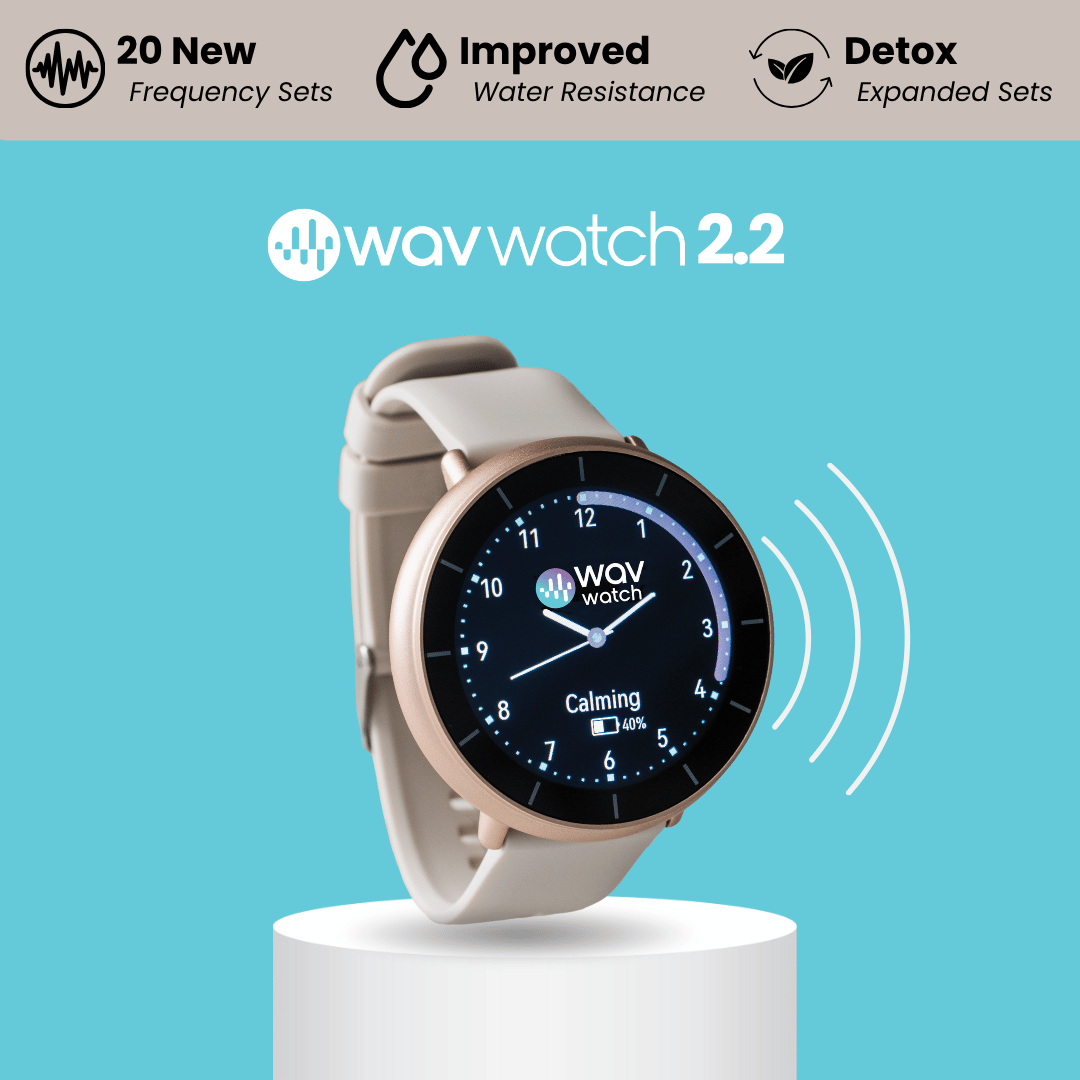
Product Name: WAVwatch 2.2 Preorder
Quantity included: 1
Price: $697.00
Product Description: WAVwatch 2.2 is here! Due to extremely high demand, our first batch of Rose Gold pre-orders are now sold out. New Rose Gold orders will not ship until January. Pay in full now to reserve yours in advance. Get more personalized wellness possibilities than ever before! ✓ 20 New Frequency Sets✓ Improved durability & water resistance ✓ Up to 18 hour battery life ✓ No WiFi, Bluetooth, or EMFs! WAVwatch 2.2 delivers a major upgrade from 2.0 — expanding from 146 to 166 Frequency Sets, adding brand-new programs for energy, detox, brain clarity, sleep, men’s and women’s health, and overall daily wellness. WAVwatch 2.2 includes the completely new Good Energy folder, enhanced WAVdetox options, a dedicated Vagus Nerve program, and redesigned Men’s and Women’s Health sets that replace the old “Reproductive Wellness” program with more targeted, effective support. All original 2.0 frequencies remain, but 2.2 organizes them more intuitively, adds 20 powerful new options, and features improved durability and water resistance. In short.
Product Image:
Ingredients:
Product Safety: rose gold
Study Design & Methodology
Inappropriate Participants & Inclusion/Exclusion
Under the Efforia minimal risk protocol, within which this study is reviewed for safety and human subjects ethics, all individuals over the age of consent are eligible, however, it is the responsibility of participants to determine if their unique circumstances make participation inappropriate.
Based on the provided risks, informed consent, intervention, and outcome measures, here is a table identifying the kinds of individuals who should avoid participating in this trial:
| Category of Individual | Contraindications | Reason |
|---|---|---|
| Individuals with severe or chronic skin conditions | Risk of skin irritation or allergic reaction | The device may exacerbate skin issues due to potential irritation or allergic reactions. |
| Individuals with severe back pain | Exacerbation of existing back pain | The use of the device may worsen the condition instead of alleviating it. |
| Individuals prone to headaches or dizziness | Headaches and dizziness | The device may induce or worsen these symptoms, affecting the individual's well-being. |
| Individuals with mood disorders | Mood changes, frustration, and irritation | Potential mood changes and frustration could exacerbate existing mental health conditions. |
| Individuals with cognitive impairments | Cognitive impairment | Temporary distraction or discomfort could further impact cognitive function. |
| Individuals with respiratory conditions | Breathing or respiratory issues | Although not typically associated, any such occurrences should be taken seriously. |
| Pregnant individuals | Unknown risks to pregnancy | Limited research data could imply unforeseen risks during pregnancy. |
These groups should consider their unique health circumstances and consult with a healthcare professional before deciding to participate in the trial.
Study Design & Experience
Treatment Activities:
-
Daily Activity: Use the WAVwatch 2.0 with the 'Back Support Frequency' every day to help maintain back comfort, especially after long periods of sitting or during physically demanding tasks.
-
Assessments and Frequency:
-
Daily: Check in with how your back feels.
-
Throughout the Study: Complete the PROMIS® Item Bank v.2.0 – Behavior Survey, Quality of Life and Health Survey, and PROMIS® Numeric Rating Scale v.1.0 – Comfort Level 1a as outlined in the protocol.
-
Methodology:
This study, titled "Wave Goodbye to Back Comfort Challenges: Soundwave Support Study," is designed to explore the potential benefits of WAVwatch 2.0, a soundwave therapy device, for enhancing back comfort and mobility. This single-arm observational study allows participants to act as their own controls—an approach we call a "Signal Phase" study.
Participants will engage with WAVwatch 2.0 for 30 days, following a structured protocol that encourages consistent use of the 'Back Support Frequency.' The study experience is tailored to provide participants with personal insights, helping them understand how this non-invasive device may support their daily comfort and mobility.
To help participants maintain consistent usage, tools like Google Calendar and Todoist are recommended for reminders. The study emphasizes maintaining a positive experience while exploring this wellness technology. Participant privacy is protected, and all findings will be shared in an accessible format.
Study Measures:
-
Primary Measures: Improved back comfort and enhanced quality of life, assessed through self-reported surveys (PROMIS® Item Bank v.2.0 – Behavior Survey, Quality of Life and Health Survey, and PROMIS® Numeric Rating Scale v.1.0 – Comfort Level 1a).
-
Outcome Focus: Understanding how WAVwatch 2.0 may support daily back comfort and mobility, providing participants with clear insights into its potential benefits.
Should the study show promising results, it may serve as a foundation for future research, helping to further clarify the role of soundwave therapy in supporting everyday wellness. For more information on the study's design, please refer to the "Minimal Risk Umbrella Protocol."
Statistical Analysis Plan
In alignment with the Minimal Risk Umbrella protocol, we have ensured that our statistical plan is consistent with the guidelines and framework established within this protocol. Our study involves non-invasive interventions and surveys that are designed to assess pain behavior, quality of life, and pain intensity, which fall under the minimal risk category.
Limitations & Justification
Study Limitations and Justification:
In conducting this single-arm observational study under the Minimal Risk Citizen Science Umbrella Protocol, we recognize and address several inherent limitations:
-
No Control Group:
-
Without a control group, the study may be influenced by factors like participant expectations or natural variations in back comfort.
-
To account for this, an expectations questionnaire is included, helping us understand how beliefs may impact outcomes, providing a clearer picture of WAVwatch 2.0's impact on back support and mobility.
-
-
Participant Variability:
-
Individual differences in age, lifestyle, and baseline comfort levels may influence results.
-
Our study uses a robust statistical approach, including potential demographic stratification, to ensure a more accurate analysis of how WAVwatch 2.0 supports back comfort across different groups.
-
-
Single-Arm Design:
-
As a preliminary "Signal Phase" study, this design is less rigorous than randomized controlled trials but serves as an effective initial exploration.
-
It allows for the detection of promising trends, which can guide the design of future, more controlled studies.
-
-
Cost and Accessibility:
-
The study uses a consumer-paid model ($597 for materials), which may limit participant diversity.
-
To enhance accessibility, we promote the study across multiple platforms, ensuring a broad reach. Unlimited recruitment further increases the potential for diverse participation.
-
-
Scope and Future Research:
-
This study focuses on general back comfort rather than clinically diagnosed conditions, keeping it within the minimal-risk category.
-
Positive findings may justify more inclusive, funded research that further explores the benefits of WAVwatch 2.0, potentially in more targeted wellness contexts.
-
This approach aligns with our mission to democratize wellness research, providing participants with insights while building a foundation for more advanced studies. For further details, please refer to the Minimal Risk Umbrella Protocol.
Human Subjects Ethics
Suitability Under Minimal Risk Umbrella Protocol
The "Tune Up Your Back: Soundwave Wellness Study" appears to be suitable for the minimal risk umbrella protocol. This study seems to focus on enhancing general health and wellness through the use of soundwave interventions, which likely fall within the "Generally Recognized as Safe" (GRAS) category. The intervention does not require a prescription or physician diagnosis, aligns with the criteria of examining legal, easily accessible interventions, and is likely designed to enhance wellness within normal ranges. The study also seems to fall under the broad "health and wellness" domain, potentially exploring non-regulated health interventions like soundwave therapy, which is not subject to regulatory approval as a medical device or pharmaceutical.
Furthermore, the protocol does not appear to involve more than minimal risk, as soundwave therapy generally presents no more harm than daily life or routine check-ups. The study likely does not involve vulnerable populations, nor does it require specific eligibility criteria beyond legal access to the intervention. It does not seem to incorporate blinding, deception, or involve more than two blood draws, which aligns with the umbrella protocol's requirements. Additionally, the study is not a single point in time study and likely involves longitudinal observation over several days. Therefore, based on the outlined criteria and the study's focus on a safe, wellness-oriented intervention, it seems to be an appropriate fit under the minimal risk umbrella protocol.
Suitability for Pay to Participate Model
The Tune Up Your Back: Soundwave Wellness Study offers participants the opportunity to experience the WAVwatch 2.0, a non-invasive soundwave therapy device aimed at enhancing back mobility and overall comfort. Given that soundwave therapy devices like the WAVwatch 2.0 are generally available for purchase legally on the open market in the United States, it is appropriate to allow participants to pay for access to the device within the study. Consumers often show a willingness to invest in innovative wellness technologies, particularly those promoting non-invasive methods for improving physical health and well-being. Considering the price point of $597, it aligns with or is even competitive compared to similar specialized wellness products available elsewhere. The study offers additional value by providing participants with structured guidance on using the device and tracking their progress, potentially enhancing the benefits derived from the product beyond what a typical consumer might experience through independent purchase.
Furthermore, the target market for the WAVwatch 2.0 likely includes individuals interested in wellness and therapeutic technologies, many of whom may be able to afford such products without incurring significant financial hardship. The study's design considers the principles of respect for persons and autonomy by ensuring informed consent and clear communication of both the potential benefits and costs involved. By focusing on enhancing beneficence and empowering participants with access to trial outcomes, the study mitigates the risk of severe participant vulnerabilities or buyer's remorse. The voluntary nature of participation ensures that individuals choose to engage based on their interest and capacity, thus supporting the ethical conduct of this pay-to-participate model.
Human Subjects Protection Questionnaire
Beneficence
Is there a description, unambiguous research question, and purpose? Yes, the study has a clear research question and purpose, which are focused on evaluating the effects of a particular product or service on participant health outcomes. This clarity helps ensure that the study is conducted with a well-defined goal in mind.
Is the study built on what is known already? Yes, the study is designed based on existing knowledge and previous research related to the product or service being evaluated. This foundation helps ensure that the study builds on established evidence, providing a logical progression in the research field.
Will the study provide meaningful answers to the research question? Yes, the study is structured to provide meaningful answers by generating both generalizable results and insights specific to individual participants. This dual focus ensures that the findings are relevant to both the broader scientific community and the study participants.
Will the study provide valid answers to the research question? Yes, the study design is robust and methodologically sound, allowing it to produce valid answers to the research question. The methods used are appropriate for capturing accurate and reliable data that address the study's objectives.
Non-maleficence
Are participants recruited with justifiable inclusion and exclusion criteria? Yes, any individual who has already purchased the product is eligible to participate, emphasizing participant responsibility for identifying if the protocol is not suitable for them. Clear risks and special considerations are communicated through the informed consent.
Does the research team have the experience, skills, facilities, and time to complete the study? Yes, the research team is well-equipped to complete the study, with the Efforia platform providing extensive infrastructure. The Principal Investigator, Matthew Amsden, and Dr. Viral Patel offer significant expertise in decentralized trial innovation, management, and adverse event support. Additional information is available in the Minimal Risk Umbrella Protocol.
Is there a fair balance of benefits and harms (risks) for all with an interest in the study? Yes, the study's unique approach, described in the minimal risk protocol, offers added value to individuals who have purchased the product or service at no additional cost. This balance ensures that the benefits outweigh the potential risks for participants.
Will participants receive appropriate care both during and after the study? Yes, participants are responsible for seeking their own medical care in the case of an adverse event, as outlined in the informed consent. The minimal risk nature of the interventions and the added care from being in a research study provide more oversight than typically available for these interventions.
Is personal data handled appropriately (confidentiality)? Yes, personal data is handled appropriately, as detailed in the Minimal Risk Umbrella protocol.
Autonomy
Have participants been offered a fair choice through the information they are given (presented in plain English) and consent process? Yes, the informed consent document offers clear and comprehensive information about the study, ensuring participants can make an informed decision. This includes details about the study's risks, benefits, and voluntary nature.
Has the research incorporated patient and participant views? Yes, Efforia is a citizen science clinical trial platform, ensuring that studies are participant-driven. This study includes feedback from participants on their experiences and encourages questions and input throughout the process.
Justice
Are there fair payments for participation and financial recompense in case of harm? Yes, while participants pay to participate, the study offers valuable product access and health tracking, providing intrinsic value. In case of adverse events, participants are instructed to seek medical care and report the incident, understanding that medical care is their financial responsibility.
Do participants have access to an independent complaints procedure (or advocate)? Yes, participants can contact Efforia's support for concerns or complaints, ensuring an independent avenue for addressing issues. Independent ethics review board numbers are included in the informed consent for additional support.
Will the project be registered and results reported in the public domain? Yes, Efforia commits to transparency, making personal results immediately available to participants. The study authors aim to build their credibility through the dissemination of generalizable results.