


44 Day
Stirling Cooper Porn Abstinence Challenge
| STUDY TITLE | Stirling Cooper Porn Abstinence Challenge |
|---|---|
| Submitted under umbrella |
|
| Date submitted |
Jun 25, 2026 |
| End date |
There is no pre-specified end date and sub-studies remain open long-term. |
| Language |
English |
| Efforia AI IRB approval recommendation |
— |
| Recruitment page preview | |
| Informed consent | |
| Study author |
Sitrling Cooper, Matthew Amsden |
| Principal investigator |
Matthew Amsden |
| Sub-Investigator for Adverse Events |
Dr. Viral Patel |
| Description |
I spent a decade in adult film. Now I want to know what porn actually does to your body — measured, not guessed. This 30-day abstinence trial uses the Adam Sensor to track your nocturnal erections, a record of erection patterns during sleep rather than a direct measure of hormones or cardiovascular health. No shame. No moral agenda. Just your data, your body, and the truth. |
| Participant engagement length |
44 Days |
| Sponsor |
This study is made possible by your payment to cover all supplies and expenses required to participate. |
| Cost to participant |
$269 |
| Included products & services |
Adam Sensor – Nocturnal Erection Tracker: $249
|
| Outcome measures |
International Index of Erectile Function Survey Adam Sensor: Nocturnal Penile Tumescence AGING MALE SYMPTOMS SCALE (AMS) Daily Men's Health Checkin Weekly Porn Consumption Survey Perceived Stress Scale (Past Week Version) |
| Methodology |
Single Arm longitudinal where participants act as their own control |
| Basic or advanced dissemination plan |
Basic |
| Deviation from recruitment approach |
No |
| Deviation from statistical approach |
No |
| Will study include “more about you questions” |
Yes |
| ClinicalTrials.gov |
Yes |
| Commitment to list findings on ClinicalTrials.gov |
Yes |

 Preview
This document is prepared with the assistance of AI, but is reviewed by a human.
Rational & Study Design
Why I Created This Study:
Many folks don't know - I almost had a career in academic research. Life took a different turn, and I learned what porn does for performance — I built a career around it. But what most guys never ask is: what is it doing to you over time?
I hear from men constantly. Guys who can't get hard with a partner but have no problem doing so in front of a screen. Guys whose drive has flatlined. Guys who wonder if something is broken. The answers mainstream medicine gives are vague. The NoFap forums are full of dogma. Neither one is data.
That's why I built this. Not to tell you porn is evil. Not to sell you a moral framework. To give you evidence — specifically about your own body.
My Objective for You:
By the end of this study, you'll have data on whether your nocturnal erection patterns changed during 30 days without porn. The sensor does not directly measure testosterone, blood flow, or cardiovascular health, and this study cannot prove that abstinence caused a change. You'll also have data on your drive, your mood, your energy, and your self-reported erection quality.
If nothing changes, that's a real answer. If something changes, that's a real answer too.
The Research Question:
Does a 30-day porn abstinence period produce a measurable change in nocturnal penile tumescence — and what does that tell us about the relationship between habitual porn use and male sexual health?
Secondary questions:
Does abstinence affect self-reported libido, erectile quality, mood, and energy? And are the changes — if any — tied to baseline frequency of use?
You're not doing this for me. You're doing it because you want to know. That's exactly the kind of man I built this for.
The Intervention
Included Products & Services
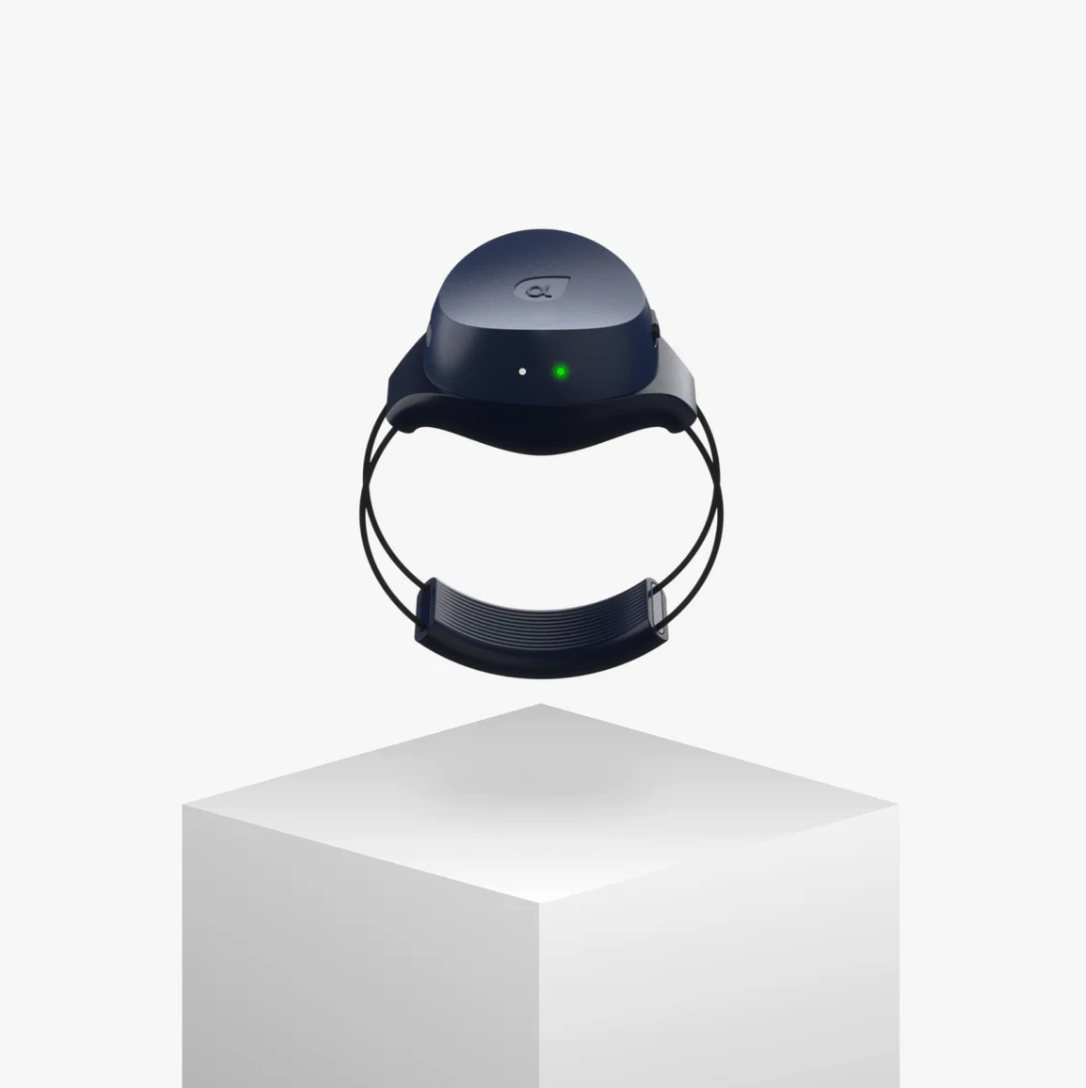
Product Name: Adam Sensor – Nocturnal Erection Tracker
Quantity included: 1
Price: $249.00
Product Description: You monitor your steps, calories, and even your credit score. Now, it's time to keep an eye on something crucial for many—your manhood's health. The Adam Sensor offers advanced technology to track erection health and gives you a chance to join leading studies in male wellness, uncovering new insights.
Product Image:
Ingredients:
Product Safety:
Study Design & Methodology
Inappropriate Participants & Inclusion/Exclusion
Under the Efforia minimal risk protocol, within which this study is reviewed for safety and human subjects ethics, all individuals over the age of consent are eligible, however, it is the responsibility of participants to determine if their unique circumstances make participation inappropriate.
Based on the intervention and outcome measures, here is a table identifying the kinds of people who should avoid being part of this trial:
| Category of Individual | Contraindications | Reason |
|---|---|---|
| Individuals with Sexual Dysfunction History | Existing sexual dysfunction conditions | Participation may exacerbate symptoms or interfere with ongoing treatments. |
| Individuals with Mental Health Disorders | Current or history of mental health issues | The intervention might impact mental health stability, especially for those with anxiety or depression. |
| Individuals with Addictive Behaviors | History of pornography addiction or other addictions | Abstinence could trigger withdrawal symptoms or lead to psychological distress. |
| Individuals on Hormonal Therapy | Ongoing hormonal treatments or conditions affecting hormones | The intervention may interfere with or skew the results due to hormonal imbalances. |
| Individuals in Unstable Relationships | Experiencing relationship issues or conflicts | The intervention could strain relationships or exacerbate personal conflicts. |
| Individuals with Privacy Concerns | High concern for privacy regarding sexual health | The study involves sensitive topics that might cause discomfort or privacy issues. |
| Individuals with Cultural or Religious Considerations | Cultural or religious beliefs opposing the study's nature | Participation may conflict with personal beliefs or social norms, causing distress. |
Participants should carefully consider their personal health, mental well-being, and social circumstances before deciding to join the study.
Study Design & Experience
The study includes two sequential seven-day baseline phases followed by 30 days of pornography abstinence: 44 study days, plus any shipping or readiness gaps. Phase 1 starts at enrollment and uses self-report measures. Phase 2 starts only after Phase 1 is complete and you confirm the Adam Sensor is ready for use; wear it nightly and continue your usual habits for seven days. Shipping gaps do not count as baseline or treatment days. Treatment starts when you complete the 30-day commitment task after baseline completion.
Measurement timing follows your actual phase and treatment start, not fixed days from enrollment. Baseline self-reports are collected before treatment; sensor baseline consists of the seven nights in Phase 2. Daily treatment check-ins and sensor use run on treatment days 1–30. Follow-up self-perception and stress questionnaires occur on treatment days 7, 14, 21 and 28; AMS and IIEF occur on treatment days 15 and 30. Complete each questionnaire using its stated recall period. Sensor outcomes are compared with Phase 2 baseline. The saved fixed enrollment-day reporting windows do not align with actual treatment start and could not be cleared through MCP. Do not interpret those automated comparisons as study results. Phase-relative reporting requires a platform correction.
Log slips honestly without restarting. Observe your usual habits during baseline; do not increase pornography use or change prescribed care for the study. Follow the manufacturer's sensor instructions. Stop using the device if it causes pain or concerning symptoms and seek appropriate care.
Adam Health will collect your nocturnal erection data through the Adam Sensor and app. Efforia will use study data to operate the study and provide personal and pooled results. Stirling Cooper and Clubhouse cannot see any data directly attributed to an individual participant. Absolute confidentiality cannot be guaranteed; review Efforia's privacy policy and Adam Health's privacy information before participating.
Statistical methodology follows the Efforia Minimal Risk Citizen Science Umbrella Protocol.
Statistical Analysis Plan
Limitations & Justification
This single-arm study can identify exploratory changes over time but cannot establish causation. Expectation effects, self-report bias, sleep, adherence, missing data and device performance can affect results. Adam Sensor readings are not direct hormone or cardiovascular measurements. Shipping gaps and actual phase starts must be accounted for; fixed enrollment-day comparisons are unsuitable. Statistical methodology follows the Efforia Minimal Risk Citizen Science Umbrella Protocol.
Human Subjects Ethics
Suitability Under Minimal Risk Umbrella Protocol
Yes, this study might appear unsuitable for the inclusion under the minimal risk umbrella protocol. While the title suggests a focus on sexual content, it is specifically to avoid this content. It is exactly the opposite of titillation. The study is designed for a broad audience. And given the current cultural conversation around the overuse of porn among all individuals (specifically men), and the increased focus in general men’s sexual health this is not specifically targeting those with any specific vulnerabilities.
Yes, the study collects some sensitive information. It does involve sensitive personal data. But no more or no less than some other minimal risk study protocols on the platform. The study specifically asks individuals to avoid sexual content (and it does not depict violence). And therefore actually meets the criteria for minimal risk.
Suitability for Pay to Participate Model
Participation costs $269 including shipping. The $20 increase over the previous price is shipping. The package includes the Adam Sensor and the study experience. Personal benefit is uncertain; sensor data do not directly measure hormones or diagnose cardiovascular disease. Participants should consider the cost, burden and uncertain benefits. Free participation for existing-device owners has not been confirmed in the current operational configuration.
Human Subjects Protection Questionnaire
Beneficence
Is there a description, unambiguous research question, and purpose? Yes, the study clearly outlines its research question and purpose, focusing on evaluating the effectiveness of a specific product or service offered by Efforia. This clarity ensures the study's objectives are well-defined and easily understood by participants and researchers alike.
Is the study built on what is known already? Yes, the study builds on existing knowledge by utilizing the Efforia platform, which leverages previous research and real-life experiences of participants to inform its design. This ensures that the study is grounded in a solid foundation of prior findings and insights.
Will the study provide meaningful answers to the research question? Yes, the study is designed to produce generalizable results that are relevant to both the broader research community and the specific participants involved. This dual focus ensures that the study's findings will be significant and applicable.
Will the study provide valid answers to the research question? Yes, the study employs robust methodologies and leverages the extensive infrastructure of the Efforia platform to ensure the validity of its findings. The study's design is carefully crafted to yield accurate and reliable results.
Non-maleficence
Are participants recruited with justifiable inclusion and exclusion criteria? Yes, any individual who has already purchased the product is eligible to participate. Efforia emphasizes participant responsibility by providing clear risks and considerations in the informed consent, ensuring minimal risk protocols are appropriate for each participant.
Does the research team have the experience, skills, facilities, and time to complete the study? Yes, the research team is well-equipped with the necessary experience, skills, and infrastructure from the Efforia platform to conduct decentralized minimal risk studies. The team is led by Matthew Amsden, an expert in decentralized trial management, and supported by Dr. Viral Patel for any adverse events, ensuring comprehensive oversight.
Is there a fair balance of benefits and harms (risks) for all with an interest in the study? Yes, the study's unique approach, as outlined in the minimal risk protocol, offers added value to participants who have purchased the product at no extra cost. This balance ensures that participants benefit from the study while minimizing potential risks.
Will participants receive appropriate care both during and after the study? Yes, participants are advised to seek their own medical care in case of adverse events, as per the informed consent. However, the minimal risk nature of the interventions and the study's monitoring provide more care than participants would receive outside the research context.
Is personal data handled appropriately (confidentiality)? Yes, personal data is managed with confidentiality, as detailed in the Minimal Risk Umbrella protocol, ensuring participant privacy and data protection.
Autonomy
Have participants been offered a fair choice through the information they are given (presented in plain English) and consent process? Yes, the informed consent document is written in plain English and provides comprehensive information about the study, its risks, benefits, and the voluntary nature of participation, allowing participants to make informed decisions.
Has the research incorporated patient and participant views? Yes, the study is designed to incorporate participant feedback, as Efforia is a participant-driven platform. The consent document encourages participants to provide input throughout the study, ensuring their views are considered.
Justice
Are there fair payments for participation and financial recompense in case of harm? Yes, while participants pay to participate, the study offers valuable product tracking and health outcome monitoring, providing intrinsic value. Participants understand that medical care is their financial responsibility in case of adverse events, and they are instructed to report incidents to Efforia.
Do participants have access to an independent complaints procedure (or advocate)? Yes, participants can contact Efforia's support for concerns or complaints and have access to independent ethics review board contacts included in the informed consent, providing multiple avenues for addressing issues.
Will the project be registered and results reported in the public domain? Yes, Efforia is committed to transparency, making personal results immediately available to participants and ensuring that generalizable results contribute to the public domain, enhancing the credibility of the authors and the study.