

60 Day
SAP Good Energy Endurance Trial
| STUDY TITLE | SAP Good Energy Endurance Trial |
|---|---|
| Submitted under umbrella |
|
| Date submitted |
— |
| End date |
There is no pre-specified end date and sub-studies remain open long-term. |
| Language |
English |
| Efforia AI IRB approval recommendation |
— |
| Recruitment page preview | |
| Informed consent | |
| Study author |
Gaurav Patel |
| Principal investigator |
Matthew Amsden |
| Sub-Investigator for Adverse Events |
Dr. Viral Patel |
| Description |
The trial will investigate the effects of SAP Good Energy on gut tolerability and glucose response in endurance athletes. Participants will consume SAP Good Energy according to a specified schedule, and their gut tolerability and glucose levels will be monitored throughout the trial. |
| Participant engagement length |
60 Days |
| Sponsor |
This study is made possible by your payment to cover all supplies and expenses required to participate. |
| Cost to participant |
$0 |
| Included products & services |
SAP40 Maple Syrup Energy Gel: $35
: $0
|
| Outcome measures |
— |
| Methodology |
Single Arm longitudinal where participants act as their own control |
| Basic or advanced dissemination plan |
Basic |
| Deviation from recruitment approach |
No |
| Deviation from statistical approach |
No |
| Will study include “more about you questions” |
No |
| ClinicalTrials.gov |
Yes |
| Commitment to list findings on ClinicalTrials.gov |
Yes |

 Preview
This document is prepared with the assistance of AI, but is reviewed by a human.
Rational & Study Design
Why I created this study:
Endurance athletes are always on the hunt for that perfect energy source that not only fuels their performance but also doesn't wreak havoc on their digestion. With SAP Good Energy, a hot topic in both athletic forums and social media circles, the chatter is all about its potential to revolutionize energy supplementation. Academic studies suggest maple syrup-based products may offer benefits in glucose management and gut health. It's time to scientifically test these claims and provide athletes with data they can trust.
My Objective for You:
As an endurance athlete, you deserve an energy supplement that supports your performance without compromising your gut health. This study aims to provide you with personalized insights into how SAP Good Energy affects your glucose levels and gut tolerability, empowering you to optimize your nutrition strategy. By participating, you'll gain valuable knowledge to enhance your training and competition outcomes.
Aims & Objectives:
This trial aims to assess the impact of SAP Good Energy on gut tolerability and glucose management in endurance athletes. You will receive personalized results, allowing you to determine how this supplement influences your performance and make informed decisions about your future energy needs.
Significance & Impact:
The findings of this study have the potential to redefine energy supplementation for endurance athletes by offering a scientifically-backed option that supports both energy demands and digestive health. While individual responses may vary, the anticipated outcomes will contribute to a deeper understanding of maple syrup-based energy gels and their role in athletic performance.
The Intervention
Included Products & Services
Product Name: SAP40 Maple Syrup Energy Gel
Quantity included: 10
Price: $35.00
Product Description: SAP is a real food alternative to gels.It's FUEL you'll feel good Taking every session.Enjoy on Easy days and trust on race day. 2x10 40G SAP:ORGANIC CLASS A MAPLE + HIMALAYAN SALT40 CARBS ( 1 : 1 Carb Ratio )
Product Image:
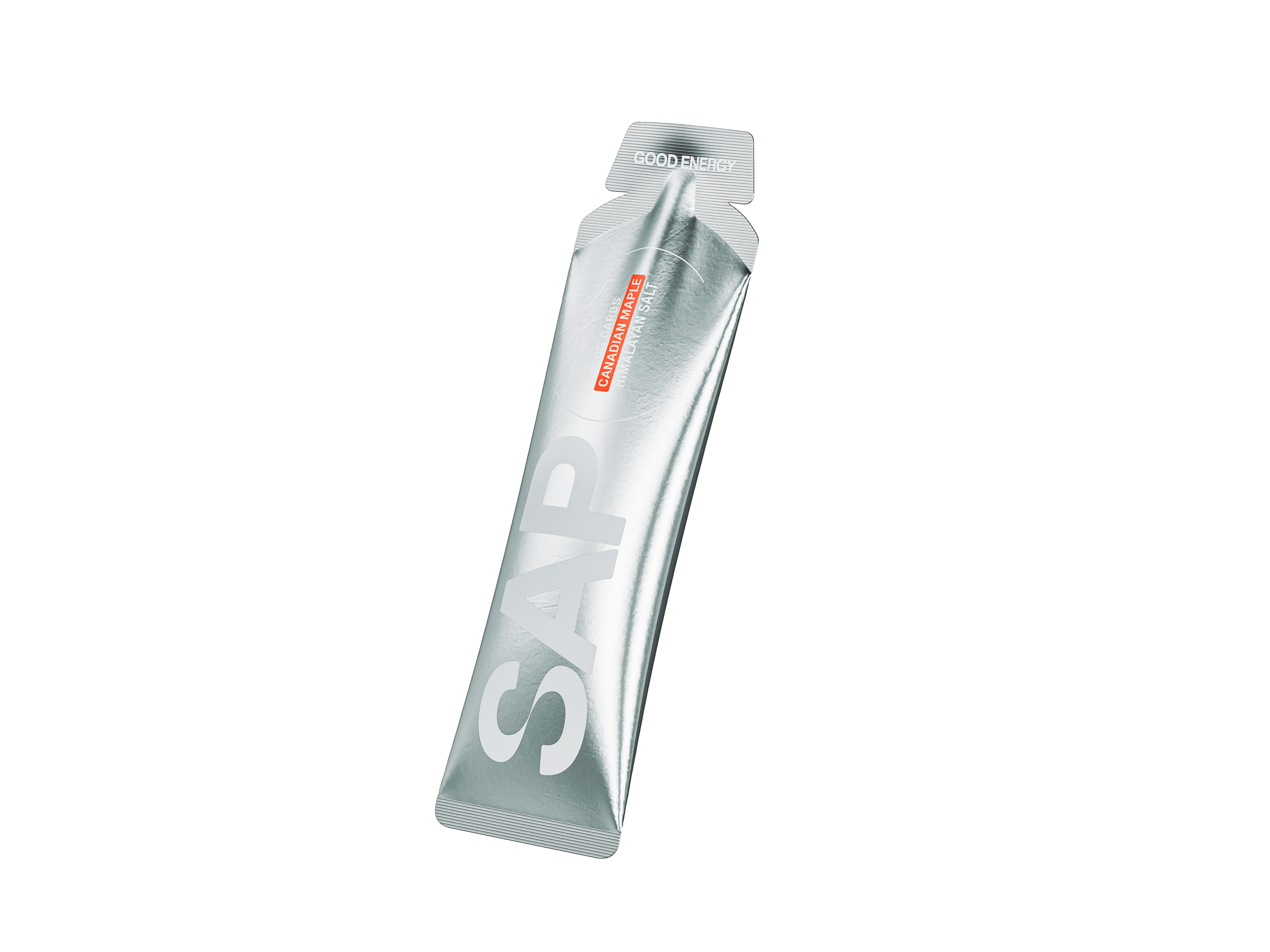
Ingredients: Each 60 g serving provides 669 kJ / 160 kcal, 0 g fat, 0 g saturated fat, 40 g carbohydrates, 39 g sugars, 0 g protein, 0.5 g salt, and 200 mg sodium. Each sachet also contains naturally occurring minerals, including calcium 46.71 mg, manganese 1.22 mg, magnesium 12 mg, potassium 143 mg, copper 0.112 mg, and zinc 0.256 mg.
Product Safety:
The investigational product is an oral nutritional sachet consisting of organic Class A Canadian maple and Himalayan salt. Based on its composition, route of administration, and intended oral use, the anticipated safety risks of the investigational product are expected to be low in appropriately screened participants when consumed at the protocol-specified dose. The product is composed of commonly consumed food-derived ingredients and does not contain a synthetic pharmacologic active ingredient, stimulant, controlled substance, alcohol, or ingredient with known abuse or dependence potential. No central nervous system, respiratory, or direct cardiovascular pharmacology is anticipated beyond effects that may occur indirectly through carbohydrate intake, sodium exposure, fluid balance, hydration status, or individual dietary context.
The principal foreseeable safety consideration for this formulation is its carbohydrate and sugar content. Each sachet contains 40 g of carbohydrates, including 39 g of sugars. Participants with diabetes, impaired glucose regulation, clinically significant insulin resistance, hypoglycemia risk, or any condition requiring strict dietary carbohydrate control may be at increased risk of transient elevations or fluctuations in blood glucose. These individuals should be excluded unless the protocol specifically allows their participation with appropriate monitoring. Depending on the study population, monitoring may include baseline medical history, concomitant medication review, fasting or post-prandial glucose assessment, hemoglobin A1c, or participant-reported symptoms of hyperglycemia or hypoglycemia.
The product also contains 0.5 g salt and 200 mg sodium per sachet. Although this sodium exposure is modest in the context of ordinary dietary intake, it may be clinically relevant for participants with sodium-restricted diets, uncontrolled hypertension, heart failure, clinically significant cardiovascular disease, renal impairment, edema, or disorders of fluid or electrolyte balance. Such participants should be excluded or monitored according to the protocol. Safety monitoring may include blood pressure, renal function, serum electrolytes, weight, edema symptoms, and concomitant medication review, particularly for participants using diuretics, antihypertensives, glucose-lowering medications, or other therapies that may affect fluid, electrolyte, or glucose balance.
The mineral content of the product is expected to be low to moderate at the proposed serving size. However, because the product contains potassium, magnesium, manganese, copper, zinc, calcium, and sodium, participants with clinically significant renal disease, hepatic disease, known mineral metabolism disorders, or medically prescribed restrictions on mineral intake should be excluded or evaluated carefully before enrollment. If the study involves repeated daily use over an extended period, the protocol should specify whether laboratory monitoring of electrolytes, renal function, or hepatic function is required based on the risk profile of the enrolled population.
Potential adverse events may include nausea, abdominal discomfort, bloating, diarrhea, constipation, reflux, headache, thirst, increased urination, transient changes in energy, transient changes in blood glucose, or symptoms related to sodium or fluid balance. Less commonly, participants may experience intolerance or hypersensitivity-type reactions, including rash, itching, swelling, wheezing, or difficulty breathing. Participants should be instructed to discontinue the investigational product and seek medical attention for symptoms suggestive of serious allergic reaction, severe gastrointestinal symptoms, chest pain, shortness of breath, syncope, severe headache, confusion, clinically significant swelling, or any other medically concerning event.
The proposed study will minimize risk through eligibility criteria, dose control, participant instructions, and adverse event monitoring. Participants should be instructed to consume no more than the protocol-specified amount, to avoid substituting the product for medically necessary nutrition, hydration, or prescribed therapy, and to report adverse symptoms promptly. The protocol should collect baseline medical history, relevant dietary restrictions, concomitant medications and supplements, and adverse events throughout the study period. Adverse events should be assessed for seriousness, severity, expectedness, and relatedness to the investigational product.
No product-specific nonclinical toxicology studies are included in this draft safety summary. Given that the investigational product is composed of commonly consumed food-derived ingredients and is proposed for oral administration at a limited daily dose, existing human dietary exposure to the ingredient class may support initial clinical evaluation in an appropriately selected population. This conclusion is contingent on adequate chemistry, manufacturing, and controls information, including ingredient identity, batch consistency, microbiological quality, heavy metal limits, contaminant testing, sodium and mineral specifications, packaging compatibility, and stability data sufficient to support the planned clinical exposure period.
The chemistry, manufacturing, and controls program should ensure that the investigational product is consistently manufactured, labeled, packaged, stored, and distributed in a manner that preserves product identity, quality, purity, strength, and stability throughout the clinical investigation. Because maple-derived products and mineral salts may vary by source and lot, certificates of analysis should be maintained for each clinical lot, and specifications should be established for identity, composition, microbiological quality, heavy metals, adulterants, and other relevant contaminants.
Based on the available information, the anticipated safety profile of the investigational product is acceptable for evaluation in a limited clinical study of appropriately screened participants, provided that the protocol includes dose control, exclusion or monitoring of participants at increased risk from sugar, sodium, mineral, renal, cardiovascular, hepatic, or metabolic considerations, clear stopping rules, and prompt review and reporting of adverse events.
Product Name:
Quantity included:
Price: $0.00
Product Description:
Product Image: —
Ingredients:
Product Safety: