

35 Day
WavWatch sleep Phase II
| STUDY TITLE | WavWatch sleep Phase II |
|---|---|
| Submitted under umbrella |
|
| Date submitted |
— |
| End date |
There is no pre-specified end date and sub-studies remain open long-term. |
| Language |
English |
| Efforia AI IRB approval recommendation |
— |
| Recruitment page preview | |
| Informed consent | |
| Study author |
Joseph Bamber, John Bamber, Linda Bamber, Matthew Amsden, Fahad Ijaz |
| Principal investigator |
Matthew Amsden |
| Sub-Investigator for Adverse Events |
Dr. Viral Patel |
| Description |
A 35-day prospective single-arm study evaluating whether nightly WAVwatch use is associated with improvements in sleep disturbance. The study includes a 7-day untreated baseline period followed by 28 days of WAVwatch use. PROMIS Sleep Disturbance is the primary outcome. Sleep-related impairment and fatigue are secondary outcomes. Participant-facing language is intentionally neutral because the study is designed to measure whether sleep changes, not to assume benefit. |
| Participant engagement length |
35 Days |
| Sponsor |
This study is made possible by your payment to cover all supplies and expenses required to participate. |
| Cost to participant |
$597 |
| Included products & services |
WAVwatch 2.2 Preorder: $697
|
| Outcome measures |
PROMIS Sleep Disturbance Scale Neuro-QOL Item Bank v1.0 –Fatigue – Short Form PROMIS Item Bank v.1.0 – Sleep-Related Impairment Survey |
| Methodology |
Single Arm longitudinal where participants act as their own control |
| Basic or advanced dissemination plan |
Basic |
| Deviation from recruitment approach |
No |
| Deviation from statistical approach |
No |
| Will study include “more about you questions” |
Yes |
| ClinicalTrials.gov |
Yes |
| Commitment to list findings on ClinicalTrials.gov |
Yes |

 Preview
This document is prepared with the assistance of AI, but is reviewed by a human.
Rational & Study Design
The Intervention
Included Products & Services
Product Name: WAVwatch 2.2 Preorder
Quantity included: 1
Price: $697.00
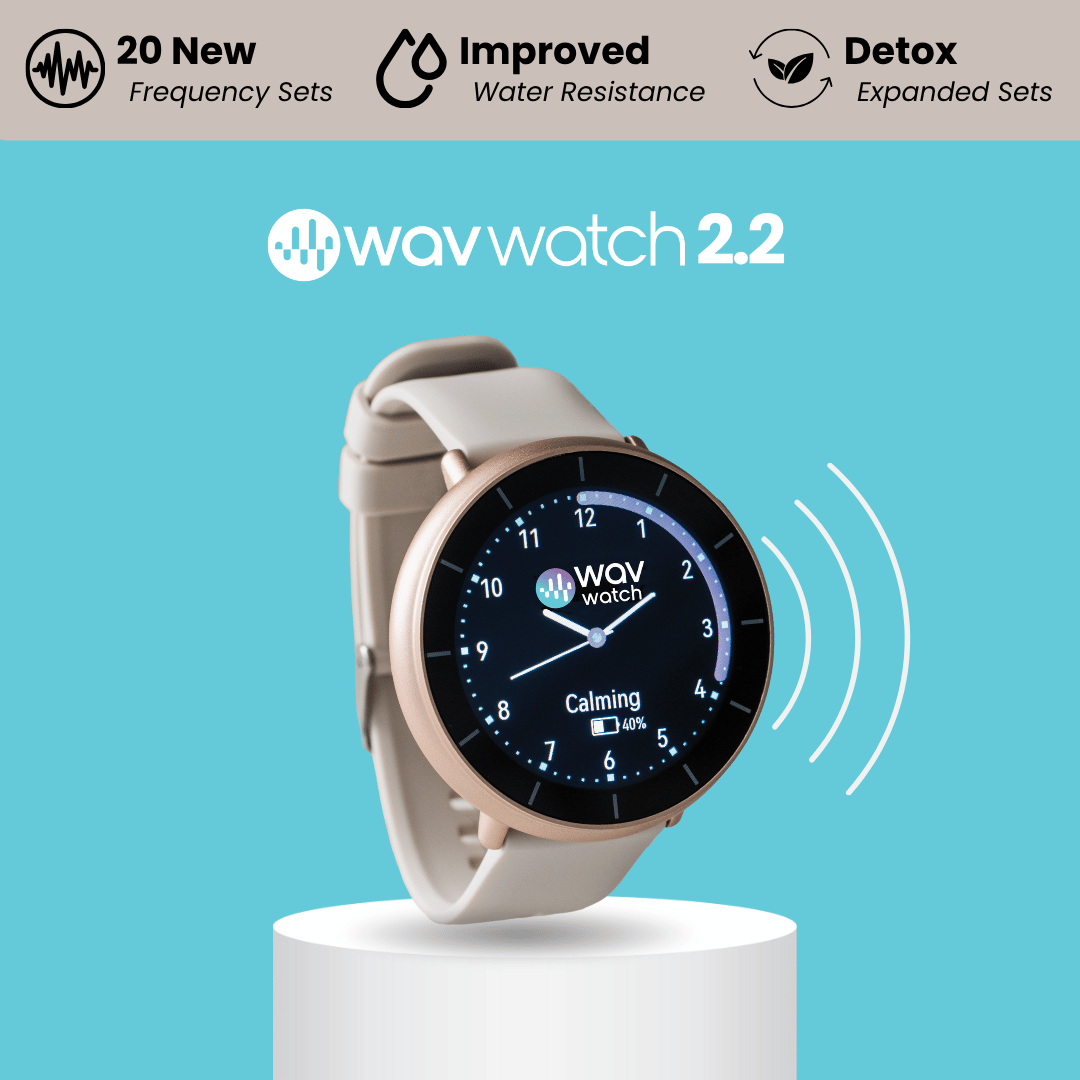
Product Description: WAVwatch 2.2 is here! Due to extremely high demand, our first batch of Rose Gold pre-orders are now sold out. New Rose Gold orders will not ship until January. Pay in full now to reserve yours in advance. Get more personalized wellness possibilities than ever before! ✓ 20 New Frequency Sets✓ Improved durability & water resistance ✓ Up to 18 hour battery life ✓ No WiFi, Bluetooth, or EMFs! WAVwatch 2.2 delivers a major upgrade from 2.0 — expanding from 146 to 166 Frequency Sets, adding brand-new programs for energy, detox, brain clarity, sleep, men’s and women’s health, and overall daily wellness. WAVwatch 2.2 includes the completely new Good Energy folder, enhanced WAVdetox options, a dedicated Vagus Nerve program, and redesigned Men’s and Women’s Health sets that replace the old “Reproductive Wellness” program with more targeted, effective support. All original 2.0 frequencies remain, but 2.2 organizes them more intuitively, adds 20 powerful new options, and features improved durability and water resistance. In short.
Product Image:
Ingredients: graphite
Product Safety:
Study Design & Methodology
Inappropriate Participants & Inclusion/Exclusion
Include: adults who can consent, understand English study materials, follow study procedures, and report at least some room for improvement in sleep.
Exclude or seek medical guidance before participation: individuals with severe or untreated sleep disorders requiring medical evaluation; known significant sound sensitivity; conditions making wrist-device use inappropriate; pregnancy or nursing when the participant or clinician considers the intervention inappropriate; or circumstances that would make adherence or interpretation unreliable.
Participants should avoid intentionally starting or stopping other sleep-focused interventions during the study when possible. Necessary medical treatment should never be delayed for research purposes.