

90 Day
MiraBurst 90-Day Transition Support
| STUDY TITLE | MiraBurst 90-Day Transition Support |
|---|---|
| Submitted under umbrella |
|
| Date submitted |
— |
| End date |
There is no pre-specified end date and sub-studies remain open long-term. |
| Language |
English |
| Efforia AI IRB approval recommendation |
— |
| Recruitment page preview | |
| Informed consent | |
| Study author |
Matthew Amsden |
| Principal investigator |
Matthew Amsden |
| Sub-Investigator for Adverse Events |
Dr. Viral Patel |
| Description |
Participants use MiraBurst Mini Squares as a daily taste-modulation routine across a 90-day transition-support period. The routine uses 1 MiraBurst Mini Square once daily before the first planned sweet-tasting food or beverage already in the participant’s normal routine. GLP-1 dose changes, tapering steps, cessation steps, medication timing, and medication-management instructions are not part of this protocol. |
| Participant engagement length |
90 Days |
| Sponsor |
This study is made possible by your payment to cover all supplies and expenses required to participate. |
| Cost to participant |
$0 |
| Included products & services |
MiraBurst Mini Squares: $58
Lingo Continuous Glucose Monitor (CGM) & App by Abbott: $49
|
| Outcome measures |
Carbohydrate Craving Questionairre Body Image and Self-Perception Survey |
| Methodology |
Single Arm longitudinal where participants act as their own control |
| Basic or advanced dissemination plan |
Basic |
| Deviation from recruitment approach |
No |
| Deviation from statistical approach |
No |
| Will study include “more about you questions” |
No |
| ClinicalTrials.gov |
Yes |
| Commitment to list findings on ClinicalTrials.gov |
Yes |

 Preview
This document is prepared with the assistance of AI, but is reviewed by a human.
Rational & Study Design
Why I created this study:
Research suggests sweetness exposure may shape cravings, intake, and food reward; social media says “taste resets” can make sugar lose its swagger. During a GLP-1 transition, many want support without medication advice. This study tests whether a simple MiraBurst Mini Square routine, paired with CGM feedback, can help turn down the sweetness dial from Baseline to Day 97.
My Objective for You:
My goal is to help you see whether one daily MiraBurst Mini Square before your first usual sweet-tasting item can shift carbohydrate cravings, body image, self-perception, and glucose-pattern awareness over 97 days—without changing medications, chasing extremes, or guessing in the dark.
Aims & Objectives:
This study evaluates whether a non-medication taste-modulation routine using MiraBurst Mini Squares, alongside the Lingo CGM & App, is associated with changes in carbohydrate craving and body image/self-perception from Baseline to Day 97. You will receive personalized results so you can see how this routine fits your real life and make smarter future decisions about your time, money, habits, and sweet tooth.
Significance & Impact:
If successful, this study may show that a low-burden, daily taste-reset routine can support healthier relationships with sweetness during a GLP-1 transition experience, while giving participants actionable feedback from validated surveys and CGM patterns. Expected outcomes include reduced craving intensity, improved self-perception, and greater awareness of glucose responses; limitations include self-reporting, no medication-management component, and the fact that this protocol is not designed to diagnose, treat, or replace medical care.
The Intervention
Included Products & Services
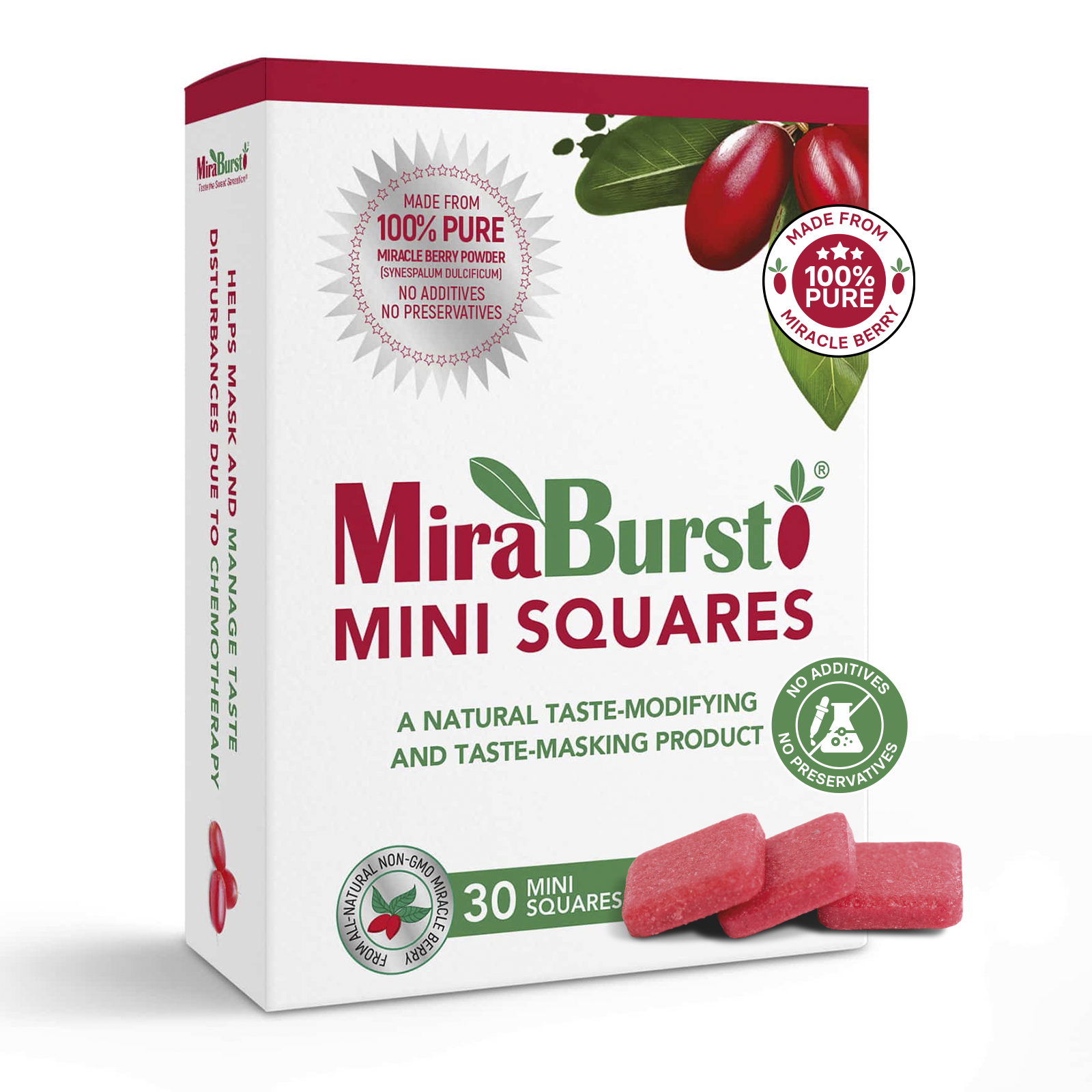
Product Name: MiraBurst Mini Squares
Quantity included: 30
Price: $58.00
Product Description: MiraBurst Mini Squares is a trademarked nutritional product. The Mini Squares are made from 100% pure miracle berry powder. The miracle berry is a fruit that, when consumed before eating or drinking, temporarily "rewires" the taste buds to turn sour or tart fruits, foods, and drinks sweet.
Product Image:
Ingredients:
MiraBurst Mini Squares contain only 1 ingredient: freeze-dried powder prepared from the fruit of Miracle berry (Synsepalum dulcificum). The ripe fruits are harvested from the shrubs of Synsepalum dulcificum grown on the company’s organic farms located in the Eastern and Western Regions of Ghana, West Africa. The berries are cultivated
using organic fertilizers and pesticides under Good Agricultural Practices. Berries that are harvested on the farms are transported under cool, dry conditions to the manufacturing site where they are visually inspected, weighed, sorted and washed with clean running water. The final wash is conducted with water pretreated with UV light.
The seeds are removed using a de-pulping machine which deposits the pulp into clean stainless-steel
containers, that are covered immediately. The pulp is then poured on stainless steel trays and blast
frozen. The frozen pulp is then freeze-dried and packaged into aluminum foil mylar bags and sealed. The
freeze-dried miracle berry powder is then weighed and placed in a refrigerator at 4 degrees Celsius
The frozen powder is shipped from Ghana to the US where it is milled and pressed into tablets. There
are no additives or preservatives added during the production of the tablets.
The Mini Squares are composed of 100% freeze-dried, powdered berry pulp.
Product Safety:
Miraculin: in vitro digestibility / allergenicity
Miraculin was shown to be fully and rapidly digested by pepsin in an in vitro digestibility assay. A
proteomic analysis of the digestibility assay indicated that it is highly unlikely that any of the protein will
remain intact within the gastrointestinal tract following digestion and therefore it is unlikely to be
absorbed intact into the body. The potential allergenicity and toxigenicity of miraculin was assessed
using a computerized model (in silico bioinformatic analyses). The results were that miraculin does not
represent a risk of allergy or toxicity to humans and has a low potential for cross-reactivity with other
allergens. A sensory study that characterizing the taste receptor activity of miraculin indicated that the
taste-modifying effect of miraculin at the concentration intended for product development has a rapid
onset and disappearance with no desensitizing impact on the receptor. The study authors concluded
that the use of miraculin to impact the sensory qualities of orally administered products with a
bitter/sour taste profile is not associated with any safety concerns.
Acute & 28-day toxicology studies - methanolic extracts
An acute toxicity study of a methanol extract of S. dulcificum pulp was conducted in rats. Cleaned, airdried fruit pulp was soaked in methanol at room temperature before filtration and the solvent evaporated to dryness. A total of 22 albino rats were used in a two-phase study. In phase I, three groups of 6 rats were orally administered with the extract (10 mg/kg, 100 mg/kg, and 1,000 mg/kg respectively for each group) by means of polythene cannula. The rats were monitored for 24 h for mortality and general behavior. In phase II, after 24 h, 3 individual rats were given three different concentrations (1600 mg/kg, 2900 mg/kg and 5000 respectively) orally, by means of polythene cannula. The fourth rats
received distilled water which served as control. The rats were monitored for 24 h for lethality and
general behavior. No mortality was observed, even at the highest dose of 5,000 mg/kg of the extract.
The report also detailed biochemical and histopathological examinations. In this part of the study, 24
albino rats, divided into 4 groups of 6 animals each, were orally administered saline, 100 mg, 200 mg
and 500 mg extract/kg body weight. Biochemical parameters including liver function enzymes, kidney
function parameters, serum electrolyte levels, serum total protein, serum total albumin, blood glucose
levels, serum lipid profile and lipid peroxidation were observed after 14 and 28 days. The livers and
kidneys of the animals were removed for histopathological studies. No negative effects on the health of
the rats were observed at any dose, the highest being 500 mg extract per kg body weight for 28 days.
A subacute toxicity study in rats was conducted using a methanolic extract of the fresh fruits of S.
dulcificum.19 The fruit was weighed, deseeded and homogenized (613 g) in 80% methanol left for 48 h
before filtrate collection. The filtrate was concentrated, and then lyophilized, resulting in a yield of 8.2%
extract (w/w). Male Wistar albino rats weighing 200-220 g were randomly divided into five groups with
five animals in each group. Group I served as the control and received distilled water. Group II-V
received oral administration of 25 mg, 50 mg, 100 mg and 200 mg/kg extract/body weight respectively,
once daily for 14 consecutive days. Blood samples were analyzed for the presence of liver enzymes and
bilirubrin. The livers of the animals were homogenized and measured for levels of total protein content,
malondialdehyde and glutathione as well as the activities of catalase, glutathione-S-transferase and
glutathione peroxidase. No signs of liver toxicity were observed. Lower doses of 50-100 mg/kg were
associated with decreases in serum total bilirubin and hepatic malondialdehyde levels and an elevation
of glutathione-S-transferase activity. The author of the study opined that the results of the study
indicated that the extract at these doses might boost antioxidant defense and have hepatoprotective
properties. The top dose of 200 mg/kg extract was associated with an increase in hepatic
malondialdehyde and a decrease in glutathione levels and might indicate a decrease in antioxidant
defenses.
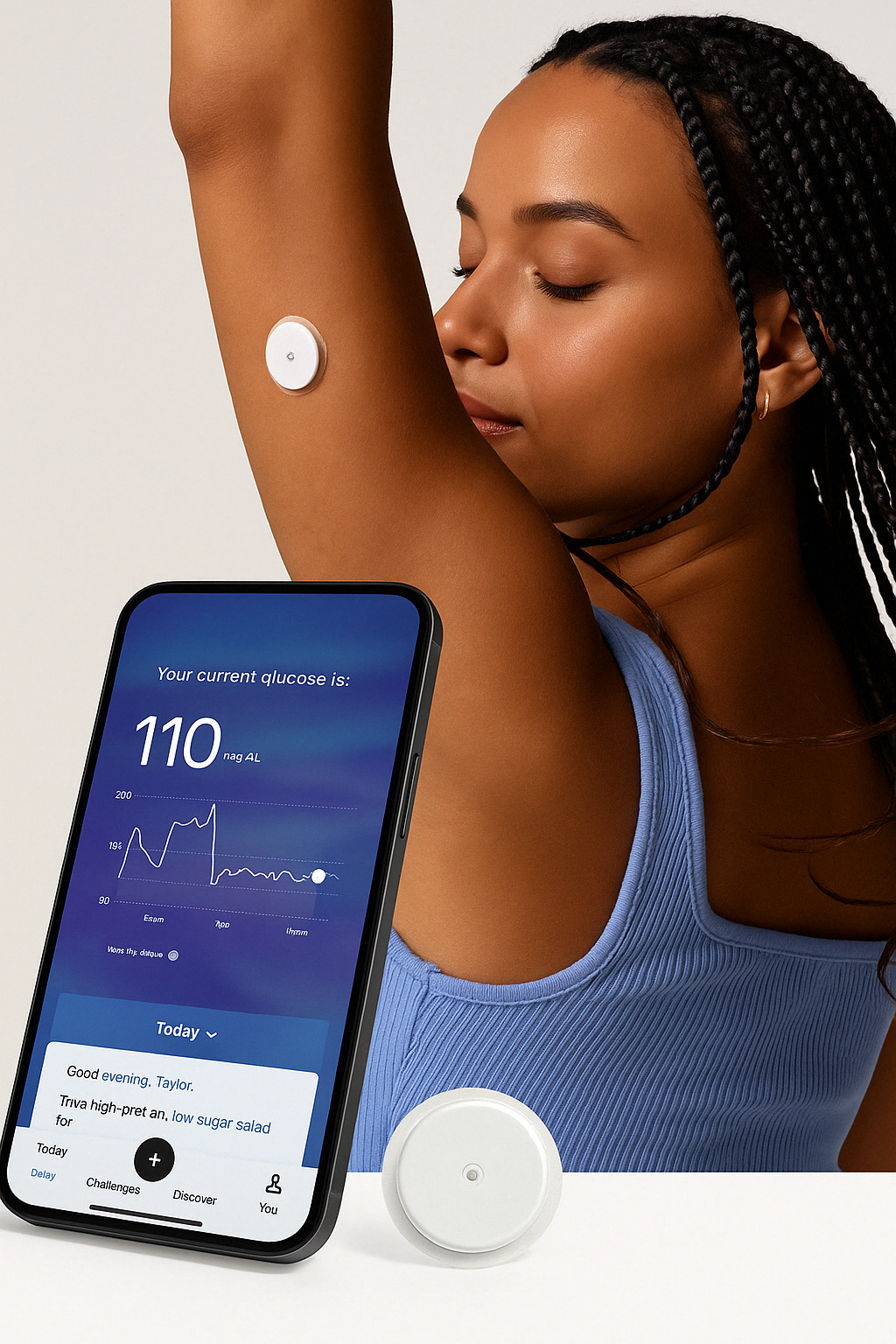
Product Name: Lingo Continuous Glucose Monitor (CGM) & App by Abbott
Quantity included: 1
Price: $49.00
Product Description: The Abbott Lingo CGM is an over-the-counter biosensor worn on the upper arm for up to 14 days, offering real-time glucose tracking via a dedicated iOS app. Designed for adults not on insulin, it provides personalized insights, habit-building coaching, and the **Lingo Count** metric to quantify glucose spikes. The app includes food/exercise logging, Apple Health integration, and challenges to improve metabolic health.
Product Image:
Ingredients: FDA 510k Summary: https://www.accessdata.fda.gov/cdrh_docs/pdf23/K233655.pdf
Product Safety:
Minor irritation at usage site.
Results from the device may exacerbate eating disorders in individuals prone to them.