

35 Day
MassZymes Digestive Comfort Trial
| STUDY TITLE | MassZymes Digestive Comfort Trial |
|---|---|
| Submitted under umbrella |
|
| Date submitted |
— |
| End date |
There is no pre-specified end date and sub-studies remain open long-term. |
| Language |
English |
| Efforia AI IRB approval recommendation |
— |
| Recruitment page preview | |
| Informed consent | |
| Study author |
Lauren Holt |
| Principal investigator |
Matthew Amsden |
| Sub-Investigator for Adverse Events |
Dr. Viral Patel |
| Description |
This protocol begins with a brief baseline run-in period followed by four weeks of daily MassZymes use. During the treatment phase, participants take one serving of MassZymes with a protein-containing meal each day to support consistency across the protocol. The routine is designed to isolate the experience of MassZymes use by keeping the active intervention simple and repeatable. |
| Participant engagement length |
35 Days |
| Sponsor |
This study is made possible by your payment to cover all supplies and expenses required to participate. |
| Cost to participant |
$0 |
| Included products & services |
MassZymes: $35
|
| Outcome measures |
— |
| Methodology |
Single Arm longitudinal where participants act as their own control |
| Basic or advanced dissemination plan |
Basic |
| Deviation from recruitment approach |
No |
| Deviation from statistical approach |
No |
| Will study include “more about you questions” |
No |
| ClinicalTrials.gov |
Yes |
| Commitment to list findings on ClinicalTrials.gov |
Yes |

 Preview
This document is prepared with the assistance of AI, but is reviewed by a human.
Rational & Study Design
The Intervention
Included Products & Services
Product Name: MassZymes
Quantity included: 30
Price: $35.00
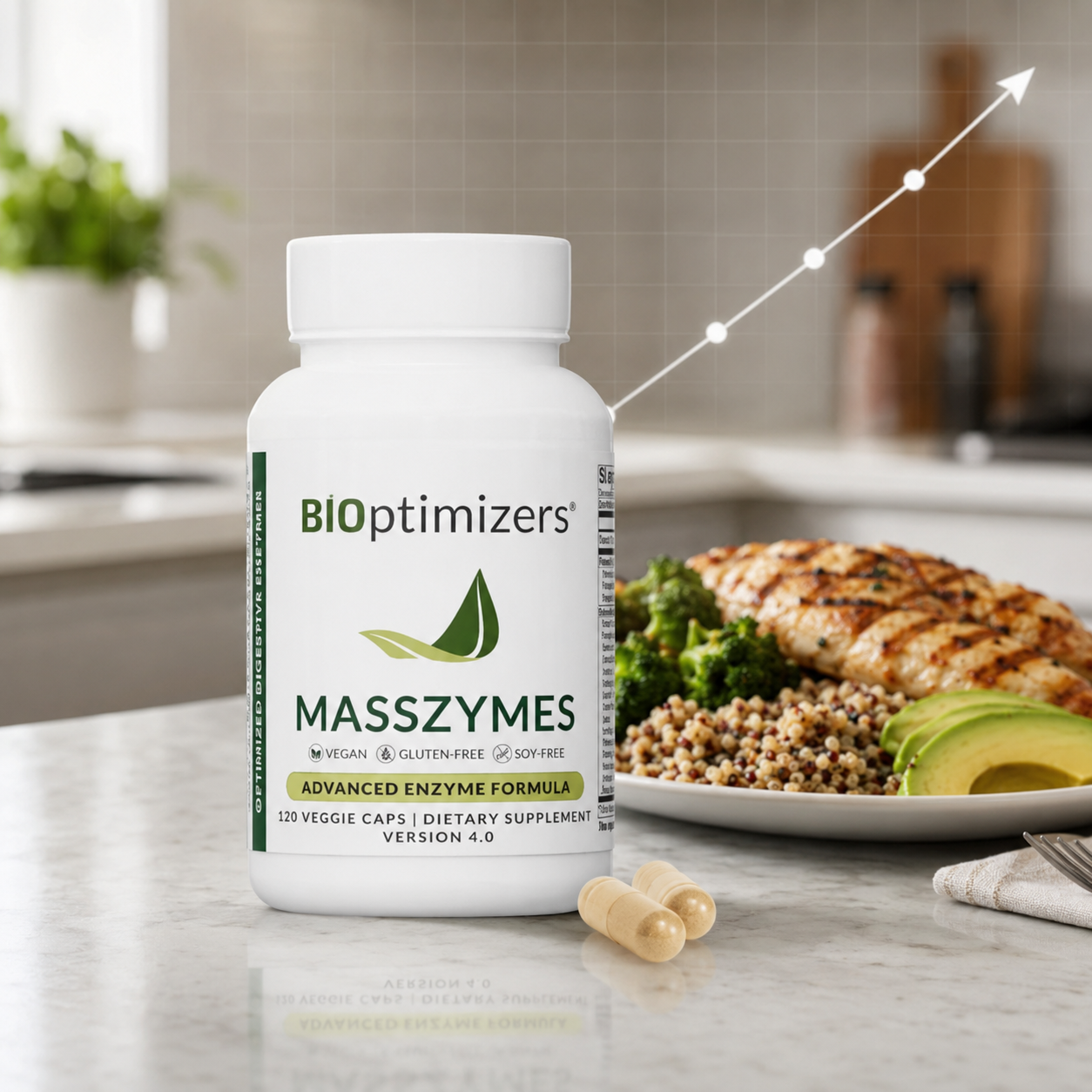
Product Description: MassZymes is a high-potency, broad-spectrum, plant-based digestive enzyme supplement containing proteases, peptidase, bromelain, amylase, lipases, lactase, and additional carbohydrate- and fiber-digesting enzymes. In this study, participants take 3 capsules once daily with their largest meal for the 14-day treatment period.
Product Image:
Ingredients:
Each three-capsule serving provides 406 mg of a protease and peptidase blend containing alkaline protease from Bacillus licheniformis at 172,000 HUT, protease from Aspergillus oryzae at 143,000 HUT, acid-stable protease from Aspergillus niger at 100 SAPU, and peptidase from Aspergillus oryzae at 7,000 HUT.
It also provides 214 mg of an enzyme blend containing amylase from Aspergillus oryzae at 10,000 DU, bromelain from Ananas comosus at 1,800,000 FCC PU, alpha-galactosidase from Aspergillus niger at 475 GalU, glucoamylase from Aspergillus niger at 32 AGU, lactase from Aspergillus oryzae at 3,162 ALU, lipase from Aspergillus niger at 4,236 FIP, lipase from Candida cylindracea/rugosa at 468 FIP, invertase from Aspergillus niger at 1,392 SU, phytase from Aspergillus niger at 32 FTU, pectinase from Aspergillus niger at 19 ENDO-PG, hemicellulase from Aspergillus niger at 948 HCU, cellulase from Aspergillus niger at 632 CU, and beta-glucanase from Trichoderma longibrachiatum at 12 BGU.
The bottle contains approximately 83 servings. Other ingredients are tapioca dextrin, hypromellose capsule, potato dextrin, and dextrin. A daily value has not been established for the enzyme blends.
Product Safety:
The investigational product is an oral multi-enzyme capsule formulation intended to support the digestion of dietary proteins, carbohydrates, fats, fibers, and selected oligosaccharides. The product contains protease, peptidase, amylase, bromelain, alpha-galactosidase, glucoamylase, lactase, lipase, invertase, phytase, pectinase, hemicellulase, cellulase, and beta-glucanase activities.
The maximum daily dose is three capsules total, administered with food. Participants will not take more than three capsules during any 24-hour period. The protocol should specify whether the three capsules are administered together with one meal or divided among meals. Until that schedule is finalized, the regimen should be described consistently as “three capsules daily, administered with food.”
Each three-capsule daily dose contains 406 mg of a protease and peptidase blend and 214 mg of a broader enzyme blend, for a total enzyme-blend weight of 620 mg per day. The inactive ingredients are tapioca dextrin, hypromellose capsule, potato dextrin, and dextrin.
The maximum daily exposure to the labeled enzyme activities is presented below.
Enzyme Source Maximum daily activity
Alkaline protease Bacillus licheniformis 172,000 HUT
Protease Aspergillus oryzae 143,000 HUT
Acid-stable protease Aspergillus niger 100 SAPU
Peptidase Aspergillus oryzae 7,000 HUT
Amylase Aspergillus oryzae 10,000 DU
Bromelain Ananas comosus 1,800,000 FCC PU
Alpha-galactosidase Aspergillus niger 475 GalU
Glucoamylase Aspergillus niger 32 AGU
Lactase Aspergillus oryzae 3,162 ALU
Lipase Aspergillus niger 4,236 FIP
Lipase Candida cylindracea/rugosa 468 FIP
Lipase Aspergillus niger 61.2 FIP
Invertase Aspergillus oryzae 1,392 SU
Phytase Aspergillus niger 32 FTU
Pectinase Aspergillus niger 19 ENDO-PG
Hemicellulase Aspergillus niger 948 HCU
Cellulase Aspergillus niger 632 CU
Beta-glucanase Trichoderma longibrachiatum 12 BGU
The combined labeled protease and peptidase activity expressed in HUT is 322,000 HUT per day. The total labeled lipase activity is 4,765.2 FIP per day.
The enzymes are intended to exert their principal activity within the gastrointestinal tract in the presence of food. Systemic exposure to intact enzymes or enzyme-derived peptides has not been characterized for the final investigational product. Accordingly, the absence of clinically meaningful systemic exposure should not be assumed unless supported by product-specific or appropriately bridged data.
2. Regulatory basis for the safety assessment
The safety assessment is based on the totality of the available evidence, including:
Prior human exposure to the previously marketed formulation.
Prior exposure to individual enzyme classes and comparable digestive-enzyme preparations.
The history of use of certain enzyme preparations in foods and dietary supplements.
Published information concerning bromelain and other proteolytic enzymes.
Product-specific chemistry, manufacturing, and controls information.
Analytical comparability between the previously marketed formulation and the final investigational formulation.
Product-specific nonclinical or clinical information, where available.
Under 21 CFR 312.23, an IND must describe previous human experience relevant to the proposed investigation, anticipated risks, the planned maximum dose and exposure duration, safety exclusions, clinical and laboratory monitoring, and the measures used to minimize risk. The IND must also contain sufficient information to support the identity, strength, quality, purity, and stability of the investigational product.
The prior commercial availability of a product or its ingredients provides supportive human-exposure information but does not independently establish the safety of a reformulated product used as an investigational drug. Similarly, the use of an enzyme preparation in food, or the existence of a GRAS notice, applies to the specific preparation and conditions of intended food use. It should not be represented as FDA approval of the investigational product, the proposed drug use, or the proposed clinical regimen.
3. Relationship to the previously marketed formulation
The investigational formulation was designed to preserve substantially the same labeled catalytic-activity profile as the previously marketed MassZymes formulation. Similarity in enzyme activity units provides a rational basis for a safety bridge because catalytic activity is more relevant than total blend weight when comparing the intended digestive function of enzyme preparations.
Nevertheless, matching activity units does not establish pharmaceutical equivalence, bioequivalence, or toxicologic equivalence. Enzyme activity units describe catalytic performance under specified assay conditions. They do not independently establish:
The amount or identity of all enzyme proteins present.
The relative proportion of active and inactive protein.
The degree of enzyme purification.
The presence of nonenzyme proteins.
Residual fermentation materials.
The impurity or secondary-metabolite profile.
Allergenic or immunogenic potential.
The presence or absence of viable production organisms.
Batch-to-batch consistency.
Stability throughout the proposed clinical-use period.
The reformulation differs from the legacy product in one or more potentially relevant respects, including the source organisms used to produce certain enzymes, the relative mass assigned to the two enzyme blends, the presence of separately declared acid-stable protease activity, the composition or sourcing of the lipase components, the excipient system, and potentially the manufacturing and purification processes.
These differences do not necessarily create additional clinical risk. They do, however, limit the extent to which prior commercial experience can be extrapolated without product-specific analytical information.
The safety bridge should therefore include a side-by-side comparison of the legacy and investigational formulations that identifies:
Every enzyme activity and source organism.
Activity per capsule and per maximum daily dose.
Total enzyme protein and total organic solids, where available.
Enzyme concentrate manufacturers and manufacturing sites.
Production-strain identifiers.
Genetic modifications, if applicable.
Fermentation and downstream purification processes.
Excipients and capsule materials.
Release specifications.
Impurity and contaminant specifications.
Stability-indicating assays and available stability data.
Any change in recommended administration, maximum daily exposure, or intended population.
4. Previous human experience
Previous human experience with the legacy formulation is relevant because the investigational product retains substantially similar principal enzyme activities. The strength of the safety bridge depends on the quality of the exposure data, the similarity of the products, and the extent to which prior users were exposed to doses equal to or greater than the proposed maximum of three capsules daily.
The IND should provide a verified exposure summary using sponsor records. The summary should address the number of bottles or capsules distributed, estimated number of users, countries of distribution, dates of marketing, labeled and reasonably foreseeable doses, estimated duration of use, adverse-event reports, serious adverse-event reports, product complaints, returns, and discontinuations associated with tolerability.
The sponsor should review all reasonably available safety sources, including:
Formal adverse-event reports.
Serious adverse-event reports.
Customer-service communications.
Product-quality complaints.
Return and refund reasons.
Distributor reports.
Medical-information inquiries.
Consumer emails and telephone contacts.
Reports submitted through social media when sufficient information is available for assessment.
Litigation or insurance claims involving alleged injury.
Duplicate reports should be reconciled. Events should be medically reviewed and, where practicable, coded using MedDRA terminology. The review should summarize seriousness, severity, expectedness, outcome, action taken, reported daily dose, duration of exposure, concomitant products, relevant medical history, and the sponsor’s assessment of relatedness.
The following language may be used once the exposure data have been verified:
From [month and year] through [data-cutoff date], approximately [number] bottles, representing approximately [number] capsules, of the legacy formulation were distributed in [countries]. Based on [method used to estimate users], this represents an estimated [number] individual users and approximately [number] person-months or person-years of exposure. The marketed directions during this period permitted [insert verified directions]. The proposed investigational maximum of three capsules daily does not exceed [or is lower than] the verified prior marketed exposure.
During this period, the sponsor received [number] adverse-event reports involving [number] identifiable consumers. Of these, [number] were classified as serious and [number] resulted in reported discontinuation. The most frequently reported events were [events]. The sponsor received [number] reports of hypersensitivity or allergic-type reactions, [number] reports of bruising or bleeding, and [number] reports of severe or persistent gastrointestinal symptoms. Medical review identified [no new safety signal or description of any identified signal]. Important limitations of the exposure data include [limitations].
If reliable denominator or dose information is unavailable, this limitation should be stated. The absence of spontaneous adverse-event reports should not be characterized as proof that no adverse events occurred because spontaneous reporting is incomplete and the number of exposed individuals may be uncertain.
Exposure to the exact final investigational formulation should be reported separately from exposure to the legacy formulation. If no person has received the final investigational formulation, the IND should state this explicitly.
FDA permits prior human experience for a Phase 1 IND to be presented as an integrated summary. If there is no previous human experience with the exact investigational product, that fact should be clearly disclosed.
6. Ingredient-specific safety considerations
6.1 Proteases and peptidases
The product contains substantial proteolytic activity over acidic, neutral, and alkaline pH conditions. The intended activity is digestion of dietary protein and peptides within the gastrointestinal tract.
The principal foreseeable tolerability concern is gastrointestinal irritation or intolerance. Potential symptoms include nausea, epigastric discomfort, abdominal discomfort, cramping, vomiting, loose stool, diarrhea, and changes in bowel frequency or consistency.
The separately declared acid-stable protease is active under low-pH conditions and therefore may act within the stomach. This component should be characterized with respect to identity, source strain, activity profile, purity, potency, and stability. Participants with active peptic ulcer disease, clinically significant active gastritis, recent gastrointestinal bleeding, or other conditions involving substantial gastrointestinal mucosal injury should be excluded from initial investigation unless adequate safety information supports their inclusion.
The capsules should be swallowed intact. Opening, chewing, or crushing the capsules may expose the oral, ocular, respiratory, or dermal surfaces to concentrated enzyme powder and should not be permitted during the study.
6.2 Bromelain
The daily dose contains 1,800,000 FCC PU of bromelain derived from Ananas comosus. Bromelain is a mixture of pineapple-derived proteolytic enzymes and associated proteins.
Hypersensitivity is a potential clinically important risk. FDA-approved labeling for a topical bromelain-derived drug identifies serious hypersensitivity reactions, including anaphylaxis, and recognizes hypersensitivity to bromelain, pineapple, papaya, or papain as relevant because of possible cross-sensitivity. The approved product, concentration, route, and treatment setting differ substantially from the oral investigational product. The labeling therefore does not quantify the risk associated with this formulation, but it establishes biological plausibility for serious allergic reactions to bromelain-containing preparations.
Participants should be excluded for known clinically significant allergy or hypersensitivity to:
Pineapple.
Bromelain.
Papaya or papain.
Any identified microbial enzyme source.
Any component of the investigational product.
The medical monitor should review individuals with a history of anaphylaxis to an unidentified food or supplement before enrollment.
Bromelain also presents a potential effect on hemostasis. FDA-approved bromelain-product labeling notes literature reports of reduced platelet aggregation and plasma fibrinogen and increases in prothrombin and partial thromboplastin times after oral bromelain administration. The same labeling cites in vitro and animal evidence of increased fibrinolytic activity. These observations do not establish that clinically significant coagulopathy will occur at the dose used in this study, but they support conservative screening and monitoring for bleeding risk.
6.3 Carbohydrases and fiber-degrading enzymes
Amylase, alpha-galactosidase, glucoamylase, lactase, invertase, phytase, pectinase, hemicellulase, cellulase, and beta-glucanase are expected to act primarily on dietary substrates in the gastrointestinal tract.
Changes in substrate digestion may result in changes in gas production, bloating, abdominal sensation, bowel frequency, stool consistency, or urgency. These effects may be caused by the investigational product, by the meal consumed with the product, or by interaction between the product and the participant’s habitual diet. Dietary context should therefore be recorded when clinically important gastrointestinal events occur.
Participants with known galactosemia or another metabolic condition in which altered digestion of a specific dietary substrate may be clinically important should be individually evaluated before enrollment.
6.4 Lipases
The formulation contains three declared lipase activities totaling 4,765.2 FIP per day. Potential tolerability effects include abdominal discomfort, nausea, changes in stool consistency, increased bowel frequency, or oily stool. The significance of any event should be assessed in relation to the participant’s diet, particularly the amount of fat consumed with the dose.
6.5 Microbial-derived enzyme proteins
The microbial-derived components are fermentation products rather than intended live microorganisms. Safety depends on adequate control of the production strain and manufacturing process.
Potential risks include hypersensitivity to enzyme proteins or nonenzyme proteins, exposure to residual fermentation materials, contamination with viable microorganisms, and exposure to relevant secondary metabolites or process-related impurities. These risks should be controlled through supplier qualification, strain documentation, release testing, and product-specific specifications.
6.6 Excipients
The formulation contains tapioca dextrin, potato dextrin, dextrin, and hypromellose. These ingredients are not expected to contribute meaningful pharmacologic activity at the quantities used. Their identity, source, quantity per capsule, allergen status, microbial quality, and compendial or internal specifications should nevertheless be documented.
The source and specification of the ingredient identified simply as “dextrin” should be clearly defined in the CMC section.
7. Anticipated adverse events
The most likely treatment-emergent adverse events are expected to be gastrointestinal. Potential events include:
Nausea.
Epigastric discomfort or burning.
Abdominal pain or cramping.
Bloating.
Flatulence.
Loose stool or diarrhea.
Increased stool frequency.
Constipation.
Urgency.
Vomiting.
Most gastrointestinal events, should they occur, are anticipated to be mild or moderate and reversible following interruption or discontinuation. This is an expectation to be evaluated prospectively and should not be described as established for the final reformulated product in the absence of direct clinical data.
Less frequent but potentially important events include:
Rash.
Pruritus.
Urticaria.
Oral or facial swelling.
Angioedema.
Wheezing or dyspnea.
Anaphylaxis.
Unusual bruising.
Epistaxis or gingival bleeding.
Gastrointestinal bleeding.
Clinically meaningful changes in platelet count or coagulation parameters.
All adverse events occurring after the first administration should be recorded regardless of whether the investigator initially considers them related to the investigational product.
8. Potential drug and supplement interactions
No product-specific clinical drug-interaction studies have been performed.
The most clinically relevant potential interaction is additive bleeding risk with anticoagulants, antiplatelet drugs, or other agents that materially affect hemostasis. Participants receiving therapeutic anticoagulation should be excluded from initial studies unless their inclusion is specifically justified.
The protocol should prospectively address use of:
Warfarin and other vitamin K antagonists.
Direct oral anticoagulants.
Heparin products.
Therapeutic antiplatelet drugs.
Regular high-dose aspirin.
Regular nonsteroidal anti-inflammatory drugs.
Other supplements or botanical products considered by the investigator to create a material bleeding risk.
A broad-spectrum digestive-enzyme product could theoretically alter the luminal degradation or absorption of concurrently administered oral medications. The clinical relevance of this possibility is unknown. Participants taking medications with a narrow therapeutic index or highly absorption-sensitive oral medications should be excluded or individually reviewed by the investigator or medical monitor.
Concomitant prescription medications, over-the-counter medications, dietary supplements, and botanical products should be recorded throughout the study. Participants should not begin a new product that could affect gastrointestinal function, bleeding risk, or the study endpoints without notifying study personnel.
9. Populations requiring exclusion or additional caution
Initial studies should exclude, unless specifically justified, participants with:
Known allergy or clinically significant hypersensitivity to pineapple, bromelain, papaya, papain, any microbial enzyme preparation, or any excipient.
Prior anaphylaxis attributed to an enzyme-containing product.
Active peptic ulcer disease.
Clinically significant active gastritis.
Active gastrointestinal bleeding or recent clinically significant gastrointestinal hemorrhage.
Active inflammatory bowel disease associated with substantial mucosal injury.
Recent major gastrointestinal surgery.
A diagnosed bleeding or coagulation disorder.
Clinically significant thrombocytopenia.
Therapeutic anticoagulant use.
A planned surgical or invasive procedure associated with material bleeding risk during treatment or the immediate follow-up period.
Clinically significant hepatic, renal, cardiovascular, hematologic, or systemic disease that, in the investigator’s judgment, could increase risk or interfere with safety assessment.
Pregnancy or breastfeeding.
Inability to swallow intact capsules.
Any condition that, in the judgment of the investigator or medical monitor, makes participation medically inappropriate.
The product has not been adequately evaluated during pregnancy or lactation. Pregnant and breastfeeding individuals should be excluded from initial investigations. Pregnancy testing and contraception requirements should be specified according to the study duration, population, and protocol risk assessment.
The available information should not be extrapolated to pediatric participants without an age-specific assessment of dose, swallowing safety, nutritional effects, allergy risk, and supporting clinical or nonclinical information.
10. Administration precautions
Participants will receive no more than three capsules total per day. The capsules will be taken with food and an adequate quantity of water.
Participants will be instructed:
Not to exceed three capsules in any 24-hour period.
Not to replace a missed dose by taking additional capsules later.
To swallow capsules intact.
Not to open, chew, crush, or dissolve the capsules.
To discontinue dosing and seek study-site guidance if symptoms of hypersensitivity, unusual bleeding, severe abdominal pain, persistent vomiting, or clinically important diarrhea occur.
To record the date and time of each dose, the meal associated with dosing, and the number of capsules taken.
Damaged or opened capsules should not be administered. Personnel handling spilled enzyme powder should avoid inhalation and direct skin or eye contact and should follow the handling procedures described in the pharmacy manual.
11. Safety and tolerability assessments
FDA recommends that early-development protocols prespecify safety assessments, toxicity monitoring, individual dose-adjustment rules, study-level stopping rules, and adverse-event collection procedures.
The following assessments are proposed.
11.1 Adverse events
Adverse events will be collected from the first dose through [number] days after the final dose. Each event will be assessed for:
Date and time of onset.
Resolution date.
Severity.
Seriousness.
Relationship to the investigational product.
Expectedness.
Action taken with the investigational product.
Treatment required.
Outcome.
Relationship to meals or other exposures.
Severity will be classified as mild, moderate, or severe according to protocol-defined criteria. Seriousness will be determined according to applicable regulatory definitions and will not be inferred solely from severity.
11.2 Gastrointestinal tolerability
Participants will complete a structured daily assessment that records:
Nausea.
Abdominal discomfort or pain.
Epigastric discomfort.
Bloating.
Flatulence.
Vomiting.
Stool frequency.
Stool consistency.
Diarrhea.
Constipation.
Urgency.
Relationship of symptoms to dosing and meals.
A validated gastrointestinal symptom instrument may be used if appropriate to the study objectives. Stool consistency may be recorded using the Bristol Stool Form Scale or another predefined measure.
11.3 Hypersensitivity monitoring
Participants will be instructed to report:
Rash.
Pruritus.
Urticaria.
Oral itching.
Facial or oral swelling.
Throat tightness.
Wheezing.
Dyspnea.
Lightheadedness or syncope.
Any symptom suggestive of an acute allergic reaction.
Any suspected systemic hypersensitivity reaction will receive prompt medical assessment. Dosing will not resume until the event has been reviewed by the investigator and medical monitor.
11.4 Bleeding monitoring
Participants will be questioned about:
Unusual bruising.
Epistaxis.
Gingival bleeding.
Prolonged bleeding from minor cuts.
Hematuria.
Hematemesis.
Melena.
Hematochezia.
Heavy or unusual menstrual bleeding, where applicable.
Any other unexpected bleeding.
11.5 Clinical laboratory assessments
Unless a different schedule is justified by the study duration and population, baseline testing should include:
Complete blood count with platelet count.
Comprehensive metabolic panel.
Prothrombin time and international normalized ratio.
Activated partial thromboplastin time.
Pregnancy testing where applicable.
For a multidose study lasting more than [insert duration], these assessments should be repeated at the end of treatment and whenever clinically indicated. Additional testing may be obtained in response to gastrointestinal symptoms, suspected hypersensitivity, bruising, bleeding, or other clinically meaningful events.
Laboratory abnormalities should be assessed for clinical significance, change from baseline, relationship to treatment, and need for follow-up.
11.6 Vital signs and physical assessment
Blood pressure, heart rate, respiratory rate, and temperature will be measured at screening or baseline and at [specified study visits]. A focused physical examination will be conducted when indicated by symptoms.
11.7 Treatment exposure and compliance
Exposure will be summarized by:
Number of capsules administered.
Number of dosing days.
Cumulative dose.
Missed doses.
Temporary interruptions.
Dose reductions, if permitted.
Permanent discontinuations.
Capsule accountability will be reconciled with participant dosing records.
12. Dose interruption and discontinuation criteria
Mild, transient gastrointestinal symptoms may be managed with continued observation if the investigator determines that continued dosing is medically appropriate.
Treatment should be temporarily interrupted for:
Persistent moderate gastrointestinal symptoms.
Recurrent vomiting.
Clinically important diarrhea.
New unexplained bruising.
Recurrent minor bleeding that is unusual for the participant.
A suspected allergic reaction that is not immediately classified as serious.
A clinically meaningful laboratory abnormality that may be treatment related.
Any event for which continued dosing could interfere with medical evaluation.
Dosing may resume only after the event has resolved or returned to an acceptable level and the investigator, in consultation with the medical monitor where appropriate, concludes that rechallenge is reasonable.
Treatment should be permanently discontinued for:
Anaphylaxis.
Angioedema.
Bronchospasm or another clinically significant systemic hypersensitivity reaction.
Clinically significant gastrointestinal bleeding.
Another serious bleeding event.
Severe or persistent abdominal pain considered possibly related to treatment.
Persistent vomiting or diarrhea associated with dehydration or inability to maintain oral intake.
A severe treatment-related adverse event.
A clinically significant coagulation abnormality considered treatment related.
Pregnancy.
Use of a prohibited medication that materially alters participant risk.
Any condition for which continued dosing is considered medically inappropriate.
Rechallenge will not be permitted following anaphylaxis, angioedema, clinically significant systemic hypersensitivity, gastrointestinal hemorrhage, serious bleeding, or another serious adverse event considered related to the investigational product.
13. Study-level suspension and stopping rules
Enrollment and dosing will be temporarily suspended pending medical and product-quality review if any of the following occurs:
One death considered possibly, probably, or definitely related to the investigational product.
One life-threatening suspected adverse reaction.
One treatment-related anaphylactic reaction.
One treatment-related serious bleeding event.
Two participants experience the same severe treatment-related adverse event.
Two or more participants experience the same unexpected and clinically significant moderate adverse event in a pattern suggesting a product-related risk.
A clinically meaningful pattern of reduced platelet count, prolonged coagulation parameters, or bleeding emerges.
A clinically meaningful cluster of severe gastrointestinal events occurs.
Product testing identifies microbial contamination, an unexpected impurity, substantial potency deviation, stability failure, or another quality defect that could affect participant safety.
New external information indicates that continued dosing may present an unreasonable risk.
Following suspension, the sponsor, investigator, medical monitor, and other appropriate reviewers will evaluate individual case narratives, timing of events, dose exposure, concomitant products, alternative causes, aggregate event frequency, relevant laboratory findings, and product-quality information.
Enrollment or dosing will resume only when the available evidence supports continued investigation and any necessary protocol, consent-form, investigator-brochure, monitoring, or product-control changes have been implemented.
14. Safety reporting
The investigator will report serious adverse events to the sponsor within the timeframe specified in the protocol. The sponsor will promptly evaluate all safety information and comply with applicable IND safety-reporting requirements.
Serious and unexpected suspected adverse reactions that meet the regulatory reporting criteria must generally be reported to FDA and participating investigators no later than 15 calendar days after the sponsor determines that the event is reportable. Unexpected fatal or life-threatening suspected adverse reactions are subject to an expedited seven-calendar-day reporting period.
The sponsor will update the investigator brochure, protocol, informed-consent materials, and other safety information when accumulating evidence materially changes the understanding of the product’s risks.
15. Overall safety assessment
The proposed maximum dose is three capsules total per day, administered with food. This provides 620 mg of enzyme blends, 322,000 HUT of combined labeled protease and peptidase activity, 100 SAPU of acid-stable protease activity, 1,800,000 FCC PU of bromelain activity, and 4,765.2 FIP of total labeled lipase activity per day.
The prior commercial experience with the legacy formulation and the broader history of use of digestive-enzyme preparations provide supportive evidence for the proposed investigation. The proposed clinical exposure may also be below previously marketed exposure if sponsor records confirm that the legacy product was routinely labeled or used at doses exceeding three capsules per day.
The reformulated product should not, however, be characterized as identical, bioequivalent, or toxicologically interchangeable with the legacy formulation solely because the labeled catalytic activities are similar. Differences in source organisms, enzyme concentrates, manufacturing processes, blend composition, excipients, impurity profiles, and stability must be evaluated through product-specific CMC information and analytical comparability.
The principal anticipated tolerability risks are gastrointestinal symptoms. The principal potentially serious identified or biologically plausible risks are hypersensitivity to bromelain or another enzyme protein and bleeding or coagulation effects associated with bromelain. These risks are addressed through participant selection, administration with food, exclusion of participants with material allergy or bleeding risks, prospective adverse-event collection, gastrointestinal and bleeding assessments, appropriate laboratory monitoring, and predefined individual and study-level stopping rules.
Subject to confirmation of clinical-lot quality, adequate characterization of the production strains and enzyme preparations, review of prior commercial safety information, and implementation of the risk-mitigation measures described above, the available information may support investigation of the reformulated product at a maximum dose of three capsules daily in the population and for the duration specified in the protocol.
This conclusion should be revised if the proposed population includes medically vulnerable participants, if the treatment duration materially exceeds prior documented use, if administration without food is introduced, if the formulation or manufacturing process changes, or if new clinical, nonclinical, manufacturing, or postmarketing information identifies an additional risk.