



30 Day
See the impact Beem’s Blue Light Therapy has on your skin health!
| STUDY TITLE | See the impact Beem’s Blue Light Therapy has on your skin health! |
|---|---|
| Submitted under umbrella | |
| Date submitted |
Oct 3, 2025 |
| End date |
There is no pre-specified end date and sub-studies remain open long-term. |
| Language |
English |
| Efforia AI IRB approval recommendation | |
| Recruitment page preview | |
| Author edit | |
| Informed consent | |
| Study author |
Ryan Junk, Jonathan DiBernard, Patrick Killen |
| Principal investigator |
Matthew Amsden |
| Sub-Investigator for Adverse Events |
Dr. Viral Patel |
| Description |
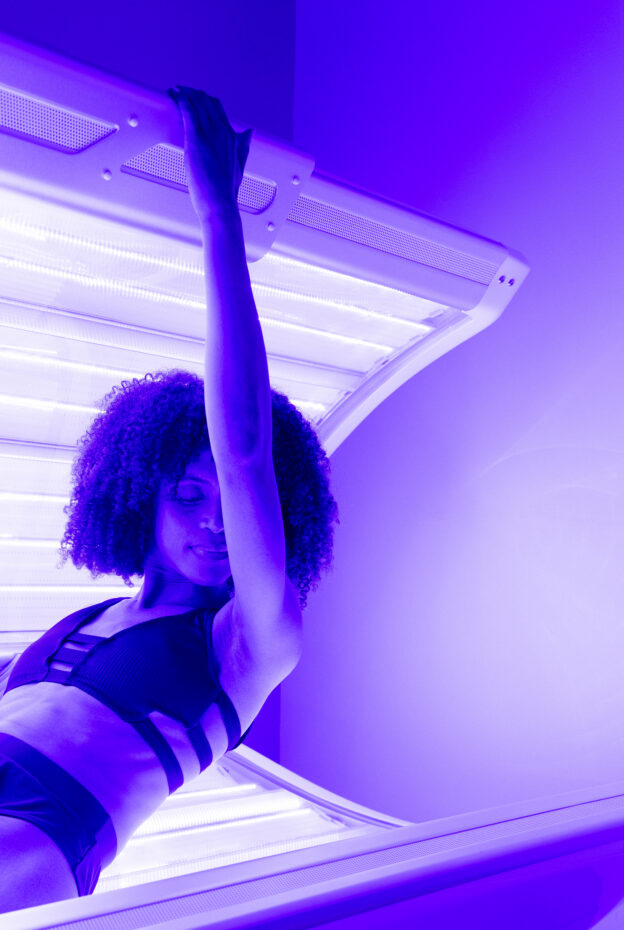
Participants will experience a rejuvenating twice-weekly light therapy journey that blends the power of blue, red, and infrared light. Each 20-minute session flows through three phases: starting with refreshing blue light to awaken and energize, then moving into soothing red light, and finishing with deeply nourishing infrared light. This unique protocol is designed to help unlock healthier-looking skin and boost your natural glow. |
| Participant engagement length |
30 Days |
| Sponsor |
This study is made possible by your payment to cover all supplies and expenses required to participate. |
| Cost to participant |
$0 |
| Included products & services | |
| Outcome measures |
Comprehensive Weekly Skin Health Self-Assessment Your Goals & Objective Expectations in this Study Dermatology Life Quality Index |
| Methodology |
Single Arm longitudinal where participants act as their own control |
| Basic or advanced dissemination plan |
Basic |
| Deviation from recruitment approach |
No |
| Deviation from statistical approach |
No |
| Will study include “more about you questions” |
No |
| Clinicaltrials.Gov |
Yes |
| Committment to list findings on clinicaltrials.Gov |
Yes |

 Preview
 This document is prepared with the assistance of AI, but is reviewed by a human.
Rational & Study Design
The Intervention
Treatment:
- First 5 Minutes
- 450nm (Blue)
- Second 5 Minutes
- 450nm (Blue)
- 660nm (Red)
- 810nm (Infrared)
- Final 10 Minutes
- 660nm (Red)
- 810nm (Infrared)
Included Products & Services
Study Design & Methodology
Inappropriate Participants & Inclusion/Exclusion
Under the Efforia minimal risk protocol, within which this study is reviewed for safety and human subjects ethics, all individuals over the age of consent are eligible, however, it is the responsibility of participants to determine if their unique circumstances make participation inappropriate.
Based on the provided information, here is a table identifying individuals who should avoid or carefully consider participating in this trial:
| Category of Individual | Contraindications | Reason |
|---|---|---|
| Individuals with Epilepsy | Light exposure | Blue Light Therapy involves exposure to light that may trigger seizures in individuals with epilepsy. |
| Individuals with Photosensitivity | Photosensitivity disorders, light-sensitive medications | These individuals may experience adverse reactions due to increased sensitivity to light. |
| Individuals with Eye Conditions | Eye strain or eye protection requirements | Blue Light Therapy may cause temporary eye strain, and individuals with pre-existing eye conditions should consider this risk. |
| Individuals with Skin Sensitivity | Mild skin irritation risk | Those with sensitive skin may experience irritation or redness from light exposure, potentially worsening their condition. |
| Pregnant Individuals | Limited safety data on use during pregnancy | As a precaution, pregnant individuals should consult a healthcare provider due to the lack of comprehensive safety data for this population. |
| Individuals Taking Certain Medications | Light-sensitive medications | Medications that increase light sensitivity may amplify the risk of adverse skin or eye reactions when using Blue Light Therapy. |
Participants should carefully evaluate their personal health circumstances and consult with healthcare professionals if needed before deciding to participate in the study.
Study Design & Experience
Twice a week, for 20 minutes, participants will undergo exposure to blue, red, and infrared light as part of the light therapy treatment.
Assesments and frequency:- Comprehensive Weekly Skin Health Self-Assessment: Conducted weekly.
- Dermatology Life Quality Index (DLQI): Conducted during the study.
- Facial Skin Self-Assessment Survey: Conducted during the study.
- Pre/Post Photos of Participants’ Skin: Conducted at the beginning and end of the study.
The study entitled "See the Impact Beem's Blue Light Therapy Has on Your Skin Health!" aims to evaluate the effectiveness of a light therapy regimen on improving skin health. This single-arm observational trial, conducted under Efforia's Signal Phase study design, involves participants undergoing a twice-weekly, 20-minute light therapy session. Each session is structured into three phases: starting with blue light, transitioning to red light, and concluding with infrared light, each targeting different aspects of skin health. By allowing participants to act as their own control, the trial will provide initial insights into the potential benefits of this therapy for enhancing skin appearance and health, with a focus on gathering preliminary efficacy and safety data.
The study's methodology is designed to assess how these light therapies influence skin conditions through a series of personalized assessments and feedback mechanisms. Participants will engage in various self-assessment tasks, including a Comprehensive Weekly Skin Health Self-Assessment, Dermatology Life Quality Index (DLQI) surveys, and Facial Skin Self-Assessment Surveys. These tasks are complemented by pre- and post-therapy photographic documentation to visually track skin changes. By collecting this data, the trial seeks to discern patterns and indications of improvement in skin health, potentially providing a directional indication of positive results from the intervention.
Should the trial demonstrate a positive signal suggesting the effectiveness of the light therapy, it will pave the way for more rigorous study designs in the future. The current study also aims to compile a more comprehensive safety profile for the intervention, addressing the current lack of robust data in this area. Participants' adherence to study protocols, including maintaining consistent skincare routines and promptly reporting any health concerns, is crucial for ensuring the validity and reliability of the study's findings. For further details on study protocols and participant guidelines, refer to the Minimal Risk Umbrella protocol.
Expected sample size:The statistical plan for this study aligns with the Minimal Risk Umbrella protocol, ensuring that we adhere to the established guidelines for studies that involve minimal risk to participants. The study design incorporates validated measures and surveys to assess various dimensions of skin health and participant expectations, allowing for a comprehensive evaluation of the effects of Beem’s Blue Light Therapy on skin health.
To maintain consistency with the Minimal Risk Umbrella protocol, we have integrated a statistical approach that emphasizes the safety and well-being of participants while ensuring robust data analysis. This approach includes descriptive statistics to summarize baseline characteristics and outcome measures, as well as inferential statistics to assess changes over time and the potential impact of the intervention.
For reviewers interested in evaluating the details of our statistical plan, we recommend consulting the statistical section within the Minimal Risk Umbrella protocol. This section provides a thorough overview of the methodologies and analytical techniques approved for use in minimal risk studies, ensuring that our approach is compliant and methodologically sound.
By adhering to the guidelines outlined in the umbrella protocol, we aim to maintain the integrity and ethical standards expected in clinical research, while providing meaningful insights into the potential benefits of light therapy on skin health.
Statistical Analysis Plan
Limitations & Justification
This single-arm observational trial, conducted under the Minimal Risk Citizen Science Umbrella Protocol, aims to evaluate the potential benefits of Blue Light Therapy—a combination of blue, red, and infrared wavelengths—on skin health and clarity. While the absence of a control group is a significant limitation that could introduce bias, efforts have been made to mitigate this through an expectations questionnaire. By assessing participant expectations, we aim to quantify potential biases and better understand how these perceptions might influence reported outcomes. This approach helps ensure that any changes in skin appearance and vitality are not solely attributed to participant enthusiasm or placebo effects.
Another limitation of our study is the relatively small sample size, which may affect the generalizability of the findings. To address this, our statistical methodology incorporates stratification by participant demographics, such as age and baseline skin condition, allowing us to analyze data more precisely. This stratification helps identify trends and patterns that may inform future, larger-scale studies. As a signal detection study, the primary objective is to identify preliminary efficacy signals, such as improvements in skin clarity or healing. Positive initial findings will pave the way for subsequent research employing more controlled and rigorous designs to validate these results.
The overarching goal of Efforia and the Minimal Risk Umbrella Protocol is to democratize clinical research, particularly by supporting exploratory research questions that might otherwise be overlooked. In this context, our study contributes to the burgeoning field of light therapy by generating valuable preliminary data. By involving participants directly in a minimally invasive study, we enable them to gain personalized insights into their skin health while contributing to a broader understanding of the potential benefits of light therapy. Participants are encouraged to refer to the Minimal Risk Umbrella Protocol for further information on the methodological framework underpinning this study.
Human Subjects Ethics
Suitability Under Minimal Risk Umbrella Protocol
The protocol "See the impact Beem’s Blue Light Therapy has on your skin health!" appears to be suitable for the minimal risk umbrella protocol for several reasons. First, it involves a minimal risk intervention—blue light therapy—that is generally recognized as safe (GRAS) and does not require a prescription or physician diagnosis. The focus on skin health falls within the broad "health and wellness" domain, making it compliant with the umbrella protocol's requirements. Additionally, the study seems to aim at enhancing general health and wellness within normal ranges, as it assesses the effects of a non-invasive, widely accessible intervention.
Moreover, the study does not involve vulnerable populations, as it does not target children, pregnant women, or incarcerated individuals. It does not require any medical devices or regulated pharmaceuticals, and there is no indication of the use of banned substances by sports regulatory bodies. The protocol does not involve blinding, deception, or more than two blood draws, and it appears to be designed to run over a period of several days, meeting the longitudinal study requirement. Therefore, the protocol aligns with the criteria outlined for sub-studies under the minimal risk umbrella protocol, making it suitable for inclusion.
Suitability for Pay to Participate Model
Human Subjects Protection Questionnaire
Beneficence
Is there a description, unambiguous research question, and purpose? Yes, the study clearly outlines its research question and purpose, focusing on evaluating the effects of a specific product or service on health outcomes, thereby providing clarity on the study's objectives.
Is the study built on what is known already? Yes, the study builds upon existing knowledge and previous research related to the product or service in question, ensuring that it contributes to the broader understanding of its efficacy and safety.
Will the study provide meaningful answers to the research question? Yes, the study is designed to yield meaningful answers not only by producing generalizable results but also by providing insights pertinent to the specific participants who have already purchased the product.
Will the study provide valid answers to the research question? Yes, the study is structured to provide valid answers through its rigorous methodology and participant feedback mechanisms, ensuring that findings are both accurate and reliable.
Non-maleficence
Are participants recruited with justifiable inclusion and exclusion criteria? Yes, any individual who has already purchased the product is eligible to participate, and the study relies on participants' responsibility to identify if the protocol is not suitable for them, as emphasized in the informed consent.
Does the research team have the experience, skills, facilities, and time to complete the study? Yes, the research team has the necessary experience and infrastructure from the Efforia platform, with oversight from Principal Investigator Matthew Amsden, and support from Dr. Viral Patel for any adverse events, as detailed in the Minimal Risk Umbrella Protocol.
Is there a fair balance of benefits and harms (risks) for all with an interest in the study? Yes, the study provides added value to participants who have purchased the product by offering additional insights and monitoring at no extra cost, as highlighted in the minimal risk protocol.
Will participants receive appropriate care both during and after the study? Yes, participants are advised to seek their own medical care in case of an adverse event, but the study provides additional monitoring and care that would not typically be available, as referenced in the Minimal Risk Umbrella Protocol.
Is personal data handled appropriately (confidentiality)? Yes, personal data is managed according to the guidelines in the Minimal Risk Umbrella Protocol, ensuring confidentiality and data protection.
Autonomy
Have participants been offered a fair choice through the information they are given (presented in plain English) and consent process? Yes, the informed consent document provides clear and comprehensive information about the study, its risks, benefits, and voluntary nature, enabling participants to make informed decisions.
Has the research incorporated patient and participant views? Yes, the study is participant-driven, as Efforia is a citizen science clinical trial platform, and it includes feedback from participants regarding their experiences with the treatment.
Justice
Are there fair payments for participation and financial recompense in case of harm? Yes, while participants pay to participate, the study offers a valuable product and tracking of health outcomes, and participants are informed that medical care is their own financial responsibility in case of adverse events.
Do participants have access to an independent complaints procedure (or advocate)? Yes, participants can contact Efforia's support for any concerns or complaints, and independent ethics review board numbers are provided in the informed consent.
Will the project be registered and results reported in the public domain? Yes, Efforia commits to transparency by making personal results immediately available to participants and aims to produce generalizable results to build credibility.