

90 Day
Can Green Light Change Your Body Composition?
| STUDY TITLE | Can Green Light Change Your Body Composition? |
|---|---|
| Submitted under umbrella |
|
| Date submitted |
— |
| End date |
There is no pre-specified end date and sub-studies remain open long-term. |
| Language |
English |
| Efforia AI IRB approval recommendation |
— |
| Recruitment page preview | |
| Informed consent | |
| Study author |
Jonathan DiBernard, Matthew Amsden |
| Principal investigator |
Matthew Amsden |
| Sub-Investigator for Adverse Events |
Dr. Viral Patel |
| Description |
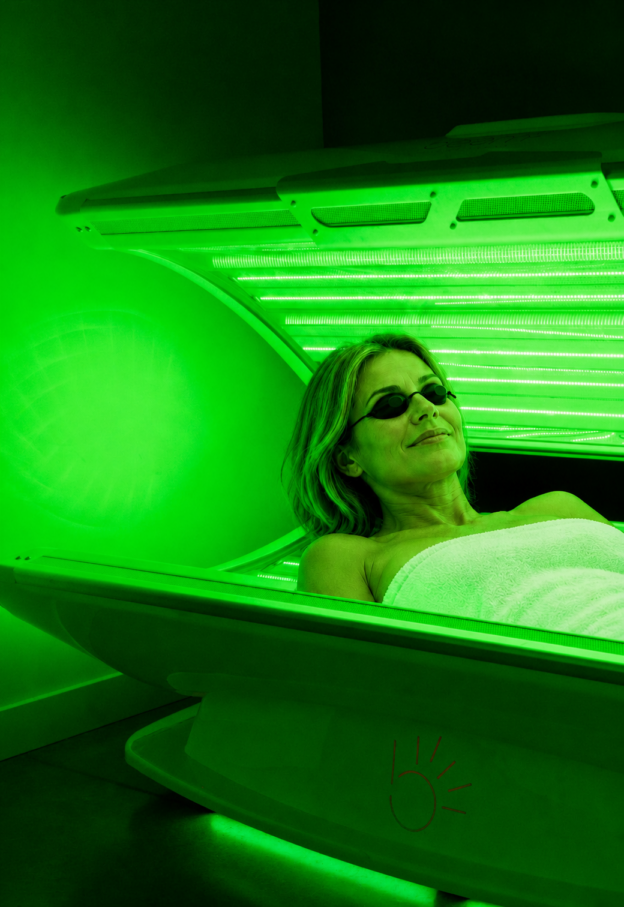
An initial Efforia study produced results interesting enough to warrant a longer, more rigorous follow-up. This is it. Over 90 days, you'll complete three weekly green light sessions while the InBody570 clinically tracks changes in your muscle, fat, and body water. Help us confirm what we saw — with the precision tools to measure it properly. |
| Participant engagement length |
90 Days |
| Sponsor |
This study is made possible by your payment to cover all supplies and expenses required to participate. |
| Cost to participant |
$0 |
| Included products & services |
— |
| Outcome measures |
Body Image and Self-Perception Survey Quality of Life and Health Survey |
| Methodology |
Single Arm longitudinal where participants act as their own control |
| Basic or advanced dissemination plan |
Basic |
| Deviation from recruitment approach |
No |
| Deviation from statistical approach |
No |
| Will study include “more about you questions” |
Yes |
| ClinicalTrials.gov |
Yes |
| Commitment to list findings on ClinicalTrials.gov |
Yes |

 Preview
This document is prepared with the assistance of AI, but is reviewed by a human.
Rational & Study Design
Why I created this study:
In a first-of-its-kind pilot study conducted at the end of 2025, participants who relaxed under green light for just 15 minutes twice a week lost a statistically significant amount of weight over 30 days — with 77% of completers showing measurable reduction. The results were similar to studies with other weight loss treatments - but no injections. No drugs. No serious adverse events. No diet journals, or exercise routines. The signal was real — but 30 days wasn't long enough, and a and tape measure weren't precise enough to capture full body composition changes. This study fixes both. We're extending to 90 days, increasing session frequency, and measuring body composition with the clinical-grade InBody570 — so we can confirm what we saw, measure it properly, and put it on a timeline that allows direct comparison to other weight loss interventions.
My Objective for You:
To give you something most weight loss programs never deliver:
precise, personalized data on what's actually changing in your body over 90 days. Using the InBody570, you'll see real measurements of muscle mass, fat mass, and body water — not just a number on a scale as you relax 3 times a week for 20 minutes in Beem's Green light therapy beds. At the end of the study walk away with a clinical-grade body composition profile and a clear picture of how your body responded. Whether green light works for you or not, you'll know — with data, not guesswork.
Aims & Objectives:
This study aims to confirm and extend the statistically significant weight loss signal observed in our 30-day pilot by evaluating the effects of green light therapy over a 90-day period using clinically validated body composition assessment. Primary objectives include measuring changes in body weight, fat mass, lean mass, and body water using the InBody570 every 30 days. Secondary objectives include evaluating changes in self-perception, quality of life, and treatment expectancy. The 90-day duration is specifically designed to align with the timelines other weight management intervention studies, enabling meaningful side-by-side comparison of effect sizes.
Significance & Impact:
The pilot study produced a compelling early signal — but a 30-day, single-arm study with basic anthropometric measures can only go so far. This follow-up study is designed to answer the harder question: does the effect hold, grow, and remain detectable using gold-standard body composition tools over a clinically relevant timeframe? If confirmed, the implications are significant. Green light therapy would represent a non-invasive, low-burden, drug-free intervention producing measurable body composition changes — without the gastrointestinal side effects, crazy diets, and defined exercise routines. This study positions green light not as hype, but as a credible, evidence-backed option for people who want real results without pharmaceuticals — and generates the data needed to say so with confidence.